


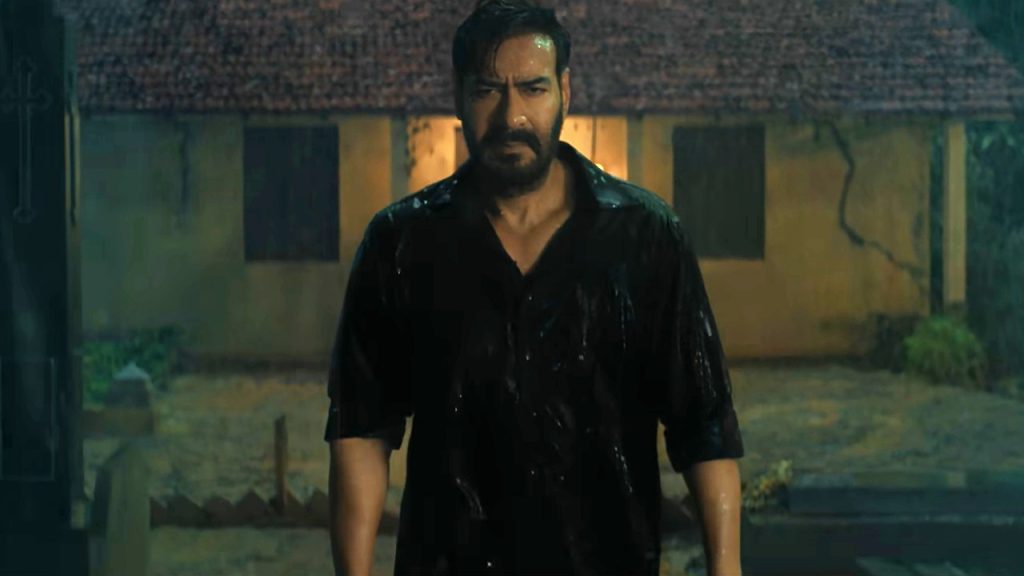
You can dig up all the dirt you want, but Ajay Devgn’s Vijay Salgaonkar owns the plot. Here’s our review of Drishyam: The Conclusion.
Quick Vibes
Genre: Thriller
Vibes: Cerebral
Film Credits
Cast: Ajay Devgn, Tabu, Shriya Saran, Jaideep Ahlawat, Ishita Dutta, Mrunal Jadhav, Kamlesh Sawant, Rajat Kapoor, Prakash Raj, Saurabh Shukla
Director: Abhishek Pathak
Writers: Abhishek Pathak, Aamil Keeyan Khan, Parveez Shaikh
Story
Six months after the dust settled on Drishyam 2, Meera Deshmukh (Tabu) and her husband Mahesh (Rajat Kapoor) are still trying to rebuild a broken life, while Vijay Salgaonkar (Ajay Devgn) and his family remain trapped in the quiet horror of a past that refuses to stay buried.
But when a quiet dinner explodes into a desperate suicide attempt by a broken Meera, Mahesh realizes that moving on isn’t an option. Consumed by grief and a demand for ultimate justice, he seeks out Crime Branch officer Rajveer Singh Tomar (Jaideep Ahlawat) to drag the cold case back into the light.
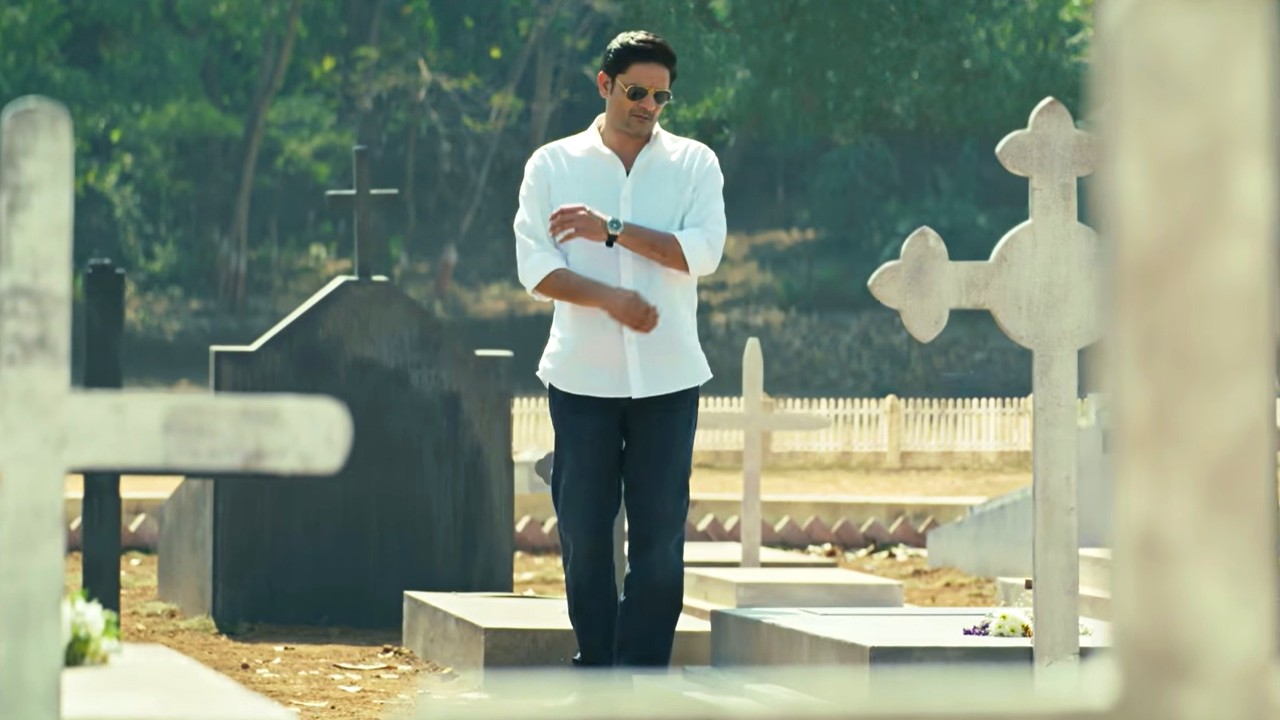
Tomar pulls no punches, pointing out the irony of a father who once asked him to close the investigation—until Mahesh makes it clear that this time, he won’t stop until he gets the truth. Equipped with a lethal piece of evidence, they zero in on the question that can tear Vijay’s airtight alibi to shreds: “Whose body did Vijay actually plant in the graveyard?”
With Tomar and the Deshmukhs chasing this fresh lead, the Salgaonkars are dragged right back into the line of fire. And this time, the clever tricks that saved them before may not be enough.

What’s Yay
The writing keeps your eyes locked on the screen and your thoughts racing, right up until the final frame when everything clicks into place, Kamlesh Sawant, aka Gaitonde’s wry humour
What’s Nay
While the plot has you hooked, a twist or two lean a little too much on perfect timing.
Writing And Direction
The story of Drishyam: The Conclusion plays out like a battle of minds. The moves feel like a chess game, with DNA reports, phone recordings, and land laws turned into weapons. The prosecution sets traps that look airtight, but the script cleverly flips details we’ve already seen.
The pacing builds slowly, starting with quiet scenes full of grief and paranoia. This makes the tension feel heavier when Tomar enters, shifting the mood from uneasy silence to sharp, immediate fear.
Instead of repeating the same tricks from the previous films, the third part twists Vijay’s old victories into weaknesses. His love for audio and visual manipulation becomes the very tool used against him, fooling both the cops and the audience into thinking his game is finally over. The eventual reveal hits harder because it proves the misdirection ran deeper than anyone guessed.
Abhishek Pathak’s direction keeps everything tight and controlled. In the climax, the courtroom, the graveyard, and the Salgaonkar home are cut together like ticking clocks. Every small cue—a casual remark, a phone contact, a passing conversation—feels ordinary at first but later clicks into place like a domino. When the truth finally drops, it feels both shocking and fair, leaving the audience stunned yet satisfied.
On the flipside, a twist or two leans a little too much on perfect timing and lucky breaks. These turns can come across as neatly arranged by the writer rather than unfolding naturally. While they don’t take away from the thrill of watching the mind games play out, you might think that these moves are powered more by cinematic luck than solid logic.
In one of the rawest moments in the film, Meera admits that she feels like walking into Vijay’s house and shooting him. Her pain comes from the cruel irony that he is celebrated as a hero for covering up a crime, while her family is branded villains for simply wanting the truth about their son. It is a chilling confession of helplessness from a mother who watched the system fail her, forced to see the man who erased her child turned into a folk hero while her grief is painted as villainy.
What makes the writing of Drishyam: The Conclusion so skillful is how seamlessly it manipulates our moral compass around that exact tension. Vijay did commit crimes by hiding evidence and blocking justice, yet the story is built so carefully that you cannot help but root for this chauthi pass aam aadmi. You know he and his family are guilty, but every time the law gets close, you find yourself hoping that they escape again.
The paradox becomes sharper when you remember how it all began. Sam’s death was an accident, the result of Anju defending herself and her mother from blackmail and assault. Legally, the family had a clear case of self-defense. But Vijay knew that with the victim’s mother leading the police, his family would face brutality instead of fairness. So he chose protection over process, hiding the body and building an alibi that turned an accident into a crime.
For Meera, none of that matters. Her son was not just killed, he was erased. She was denied even the dignity of mourning his body. Her rage comes from that loss, while Vijay’s choices come from a father’s instinct to shield his family from a system stacked against them.
This clash is what makes the story so gripping. You understand Vijay’s resolve and you feel Meera’s fury. You root for him even as you know he is guilty, and you ache for her even as her grief turns into revenge. It is a battle where justice is never simple, and every choice carries both love and tragedy.
Performances
Ajay Devgn’s performance is built on silence and control. He doesn’t rely on explosive emotions. Instead, the actor lets the weight of eight years of secrets show through his body language, heavy shoulders, and a gaze that never stops calculating. His face becomes a blank canvas, daring both the cops and the audience to guess what lies beneath.
Devgn plays Vijay as a man who has erased his own reactions, turning his poker face into his strongest shield against a system waiting to crush him. What makes this portrayal so intriguing is the way he suggests a mind running endless simulations behind a calm exterior. Even when Tomar and his team push him to the edge, his defense is still composure. He moves like someone who has trained himself to suppress every instinct. The exhaustion of carrying that burden is visible in his eyes, and it creates a quiet tension that pulls the audience in.
Despite her screen time, Tabu remains the fierce heart of the film’s moral storm. Her act is raw, stripped of artifice, and frighteningly honest. You feel the crushing weight of a woman who knows she has been outsmarted at every turn, yet refuses to surrender. Every look and every word carries the pain of someone who has lost everything but still clings to her fight. It is this mix of vulnerability and unbroken defiance that makes her presence unforgettable and keeps her at the center of the film’s emotional conflict.
Stepping into the franchise as an outsider to the local dynamic, Jaideep Ahlawat brings a sharp, formidable authority to the screen. His Tomar is cold, methodical, and deeply analytical, relying on logic instead of brute force. The actor’s grounded performance gives the investigation a dangerous edge that makes Vijay’s defense feel more precarious than ever.
Kamlesh Sawant’s return as Gaitonde gives the film some of its sharpest and most self-aware moments. His presence cuts through the suffocating tension with cynical humor that lands perfectly. He leans into the franchise’s pop culture legacy, especially when he jokes about his daughter sending him memes every October 2nd about satsang and pav bhaji, a direct nod to the viral internet phenomenon around Vijay Salgaonkar’s alibi. His dry reminder that IPS officers may change but Gaitonde remains constant is equally hilarious, poking fun at the shifting investigation while highlighting his own immortal presence across the franchise.
By blending comedy with his personal grudge against the Salgaonkars, Sawant ensures Gaitonde is both a welcome relief from the tension and a chilling reminder that the past never truly disappears.
As Nandini Salgaonkar, Shriya Saran brings the emotional balance that keeps Vijay’s stoic defense from feeling too cold. She plays her role with a fragile vulnerability that feels deeply relatable, showing the fear and panic of a family caught in a storm they cannot control.
Prakash Raj brings effortless weight to the courtroom as Indrajith Shetty. With his commanding portrayal, he turns the court hearings into a stage where he dominates with tactical aggression. What adds an extra layer of intrigue is the slight touch of humour in his dialogues, which makes his presence not only intense but also unexpectedly fun.
Rajat Kapoor as Mahesh, brings a quiet heartbreak to the Deshmukh household, carrying himself with dignity that feels deeply human. He becomes the weary conscience of the family, balancing Meera’s burning rage with a softer, more exhausted presence.
The supporting cast also fills out the rest of the film with solid, dependable performances. Saurabh Shukla adds veteran heft, while Ishita Dutta and Mrunal Jadhav seamlessly step back into their roles as the Salgaonkar daughters.
Tech Check
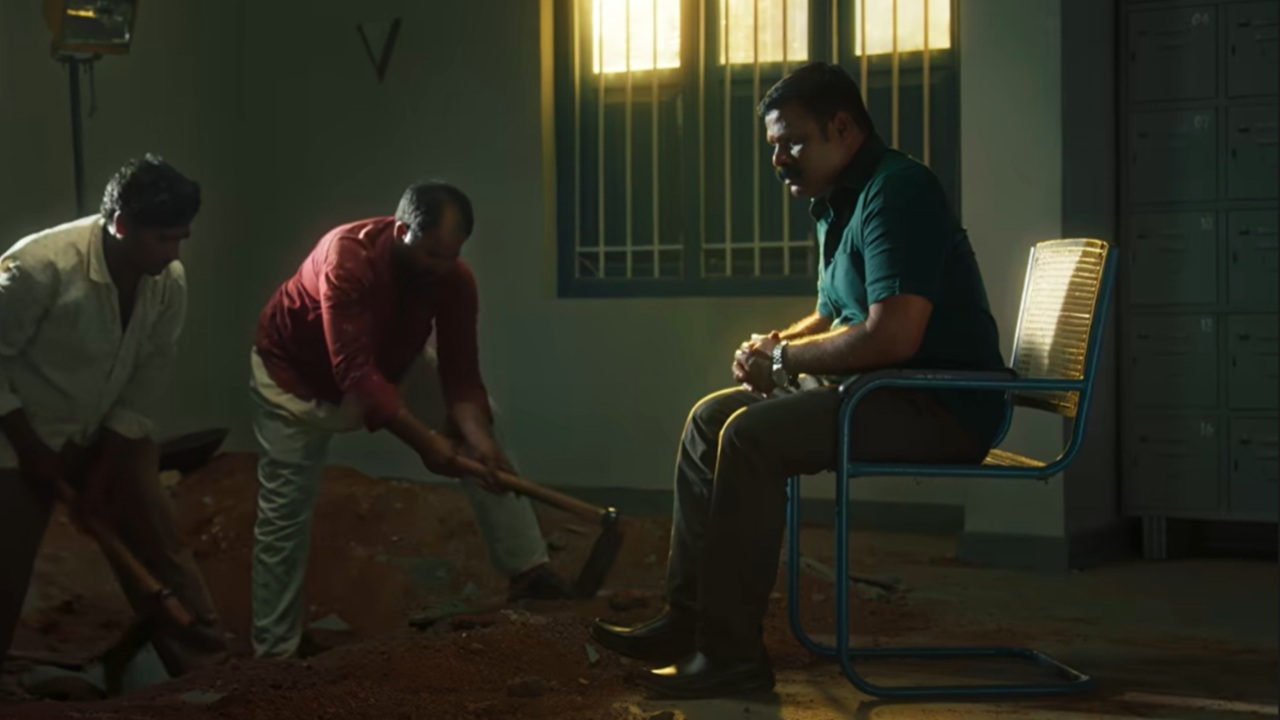
Sudhir K Chaudhary’s cinematography avoids glossy, stylized shots and instead chooses a grounded look that heightens the psychological tension of the story. Even the angles carry meaning. For example, a bird’s eye view of a car turns it into a lone piece moving across an inescapable grid, signaling a cerebral trap. Looking straight down from above creates a chilling sense of an unseen force watching, suggesting that both the hunters and the hunted are locked on a path toward collision. A car in torrential rain is a sealed capsule surrounded by hostility. The top-angle shot emphasizes this isolation. Inside, the character is suffocating under the weight of decade-long secrets, or obsession.
The Drishyam franchise is built on meticulous planning, timelines, and strategy. Here, the roads become lines, and the car becomes a moving chess piece heading directly into a trap or a win.
In a thriller driven by clever alibis and red herrings, Sandeep Francis’ editing decides exactly what the audience sees and when they see it. The cuts hold on shots just long enough to plant seeds of doubt, making viewers believe Vijay’s playbook has finally collapsed, only to recontextualize those precise moments later in the reveal.
Music
The songs in Drishyam: The Conclusion barely have recall value. The background score also struggles at times, with certain moments feeling overdone, as if the sound is trying too hard to push the mood.
The Final Shot
Ajay Devgn-Tabu’s Drishyam: The Conclusion is deeply satisfying. Come for the 10/10 game of cerebral chess, and don’t forget Gaitonde reminding us that officers come and go, but October 2nd alibis are forever.
