


Director Raj Khosla overcame Shimla’s snow shortage with a clever filming trick that gave Woh Kaun Thi its haunting look.
Manoj Kumar-Sadhana’s Woh Kaun Thi? (1964) is remembered as one of the most iconic suspense films in Hindi cinema. With its haunting songs, mysterious storyline, and unforgettable performances, it left a lasting mark on audiences. Even today, songs like ‘Lag Ja Gale’ and ‘Naina Barse’ echo in people’s hearts, keeping the film alive across generations.
In a throwback interview with Shama magazine (June 1982), the film’s director Raj Khosla shared some fascinating trivia about Woh Kaun Thi?
He revealed that he first worked on the story, then on the music. The basic framework was ready, but it was Manoj Kumar’s involvement that gave it real shape. Khosla recalled how the actor sat with him, and in just fifteen days they transformed the outline into a gripping, suspense-filled story. In those days, Khosla discovered Manoj’s true talent. He realized that the latter wasn’t just an actor, but someone with real creative skills.
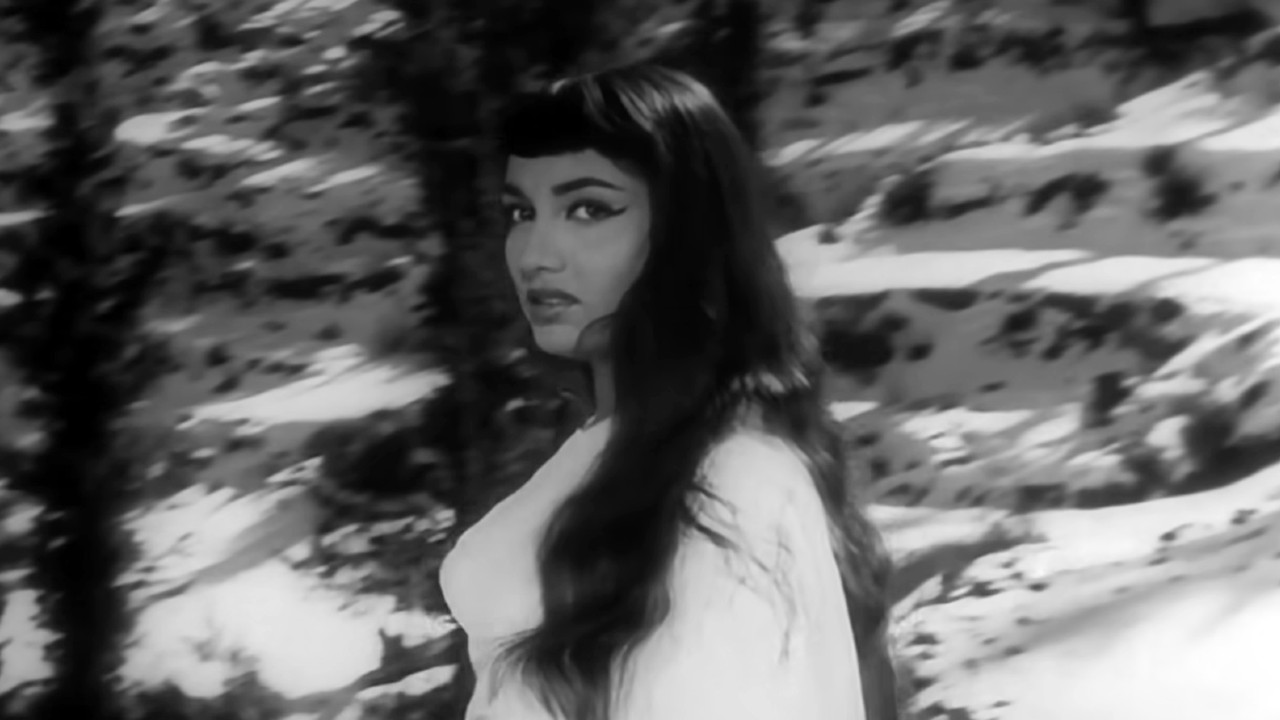
With the story in place, the team then headed to Shimla for shooting. But there was a big problem: that year, the snowfall was very little. Only a few snowy patches were visible on the peaks, while most of the ground was bare. The snow was crucial for the film’s eerie atmosphere, and without it, the suspense could fall flat.
Khosla believed that “necessity is the mother of invention,” and came up with a clever trick. He would take the actors around in a car, and whenever they spotted snow, they shot the scene there. In places without snow, he positioned the actors carefully so that the barren ground was hidden and only the snowy patch was visible. On screen, it looked like Shimla was covered in snow, though in reality it was not.
In this way, the director’s snow hack gave the film its haunting look.
Woh Kaun Thi? revolves around Anand (Manoj Kumar), a doctor, whose life turns upside down when a mysterious woman keeps appearing and pulling him into a chilling web of secrets and illusions.
