








Ishhan Dhawan and Debchandrima Singha Roy deliver stellar performances in Yeh Fitoor Tera this week, but the show rushes Saumya’s trauma recovery for romance.

Credits
Cast: Ishhan Dhawan, Debchandrima Singha Roy, Arnav Maggo, Mohit Duseja, Aman Verma, Sanjeev Seth, Rinku Ghosh, Eindraneel Bhattacharya, Farida Dadi, Gunn Kansara, Ishani Banerjee, Neha Narang, Rahul Ailani
Director: Arshad Khan
Concept: Ved Raj
Episodic Story-telling: Pavni Mehandiratta, Malavika Asthana
Screenplay: Bhavna Vyas
Dialogues: Shivangi Singh
Editor: Shashank Singh
Costumes: Ritu Deora, Karishma Salian
Cinematography: Sarfaraz Meghani
Creative Team: Janhvi Aasthana, Sankalp Gala
Streaming Platforms: Star Plus, JioHotstar
Plot Recap (Episodes 26-32)
Roop waves his property papers like a weapon, trying to drive Anoop’s family out. Anoop is ready to pack, but Madhu refuses, convinced that leaving will only spark gossip and ruin Saumya’s name. Jeet steps in with a clever fix, suggesting they move upstairs with him. The family agrees, leaving Roop fuming while Saumya grows emotional as Jeet reminds her the blame belongs to Roop, not her. Uma, now bold, warns Roop she will walk out if he keeps disrespecting her, and moves in with the Mathurs at Jeet’s place.
Saumya, feeling lighter than ever, posts about her freedom online while Nita nudges Ridhan toward a proposal. On the terrace, Jeet teasingly helps Saumya fix her hair before Krish breaks down in guilt. Saumya consoles him with a rakhi, but Krish jokes that Jeet is stealing his best-friend spot, leaving Saumya quietly aware of her growing feelings.
Sanjiv is stunned to learn Anoop arranged Jeet’s release. Roop pretends to be generous in front of the family, then corners Anoop with threats about Saumya’s dignity. A laundry woman overhears, putting Saumya’s trauma at risk of becoming gossip.
On Rakshabandhan, Nita flaunts Ridhan’s family while sidelining Jeet, who ties a rakhi to his bike in hurt. Saumya cheers him up online. Later, during a carrom game, Jeet slips and calls Madhu “Maa.” Anoop shuts down the fun, while Sanjeev pressures Reva to claim Ridhan. When the laundry woman tries to spread rumors, Jeet scares her with a fake gun, earning a scolding from Anoop.
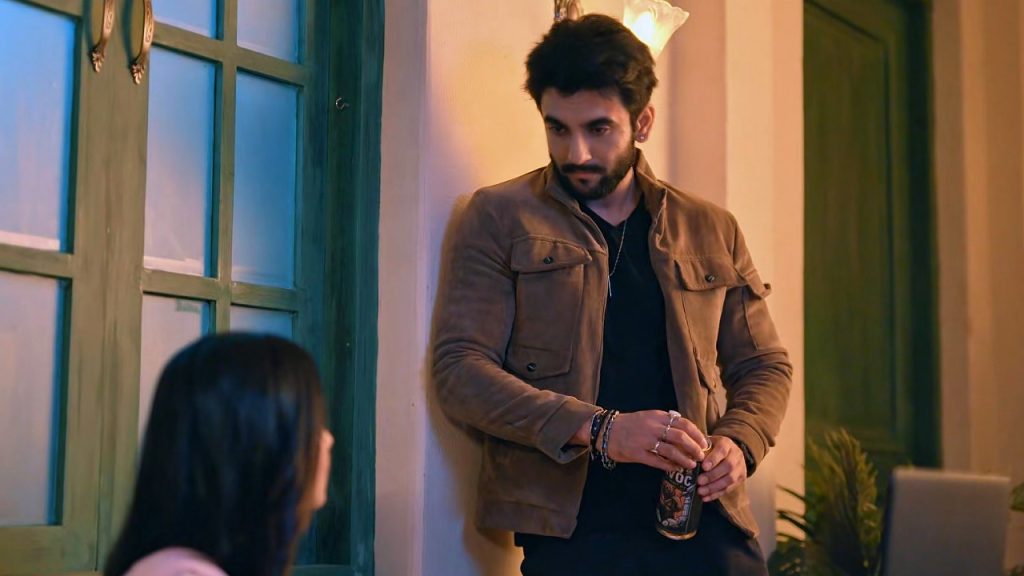
Anoop refuses to lean on Roop and sets up Saumya’s matrimonial profile. Jeet helps her pose for the perfect photo with a soda-can trick, sparking a heartfelt chat about marriage and loneliness. Saumya challenges Jeet’s emotional walls.
In college, Jeet helps Saumya finish her Janmashtami Rangoli, a moment that blends art with emotion, while Ridhan fights to launch a girls’ hockey team for her, accepting a forced date with Reva from Sanjeev to get it approved. Back home, Anoop beams when a bank officer shows interest in Saumya. Jeet, clueless, wipes his bike with her pink dupatta, sparking comic chaos. Madhu convinces Saumya to meet the groom despite Roop’s taunts.
Sanjeev drops a double shock on Nita. Ridhan is at Reva’s house with marriage talk floating in the air, and the Bhatnagar family is about to arrive to meet Saumya. Ridhan, however, is lost in his video game. Sanjiv calls Reva with strict instructions to keep him busy for three hours and ignore every call. Reva plays along with another match, but Ridhan’s thoughts drift back to Saumya. He gushes about how unique and irreplaceable she is in his life. Reva quietly notices the insecurity behind his words and the unspoken love he carries, while Nita fumes at home, wishing Ridhan and Saumya could be together instead of Sanjeev forcing Reva into the picture.
The Bhatnagar family arrives, hosted upstairs under the excuse of renovations. Roop tries to dominate, but Saumya remembers Jeet’s advice and imagines the groom in undershirt and shorts. Her nerves vanish, her poetry shines, and the groom, Sarthak approves the match. Jeet breathes easy, Anoop beams with pride, and Saumya feels victorious, while Nita rushes to warn Ridhan before the news explodes.
Character Development
The Mathur household looks less like a family and more like a pressure cooker. Every time Saumya’s past surfaces, the instinct is not to pause or heal but to scramble into damage control. Therapy or grief processing never even enters the picture. Instead, the collective anxiety shoots up like a siren, and everyone rushes into rigid coping tricks that feel more like a survival drill than care. The goal is simple yet suffocating—guard social standing and polish dignity at all costs.
Post exposing Roop, Saumya ends up carrying the emotional weight of the household like a parent rather than a daughter. This is classic emotional parentification, where she pushes down her own trauma to manage her father’s fragile state. Knowing how much strain he is under, she goes along with the matrimonial process even though her heart hesitates. With no time or space to process her feelings, she leans on survival strategies just to get through.
Jeet offers her a quirky lifeline. His trick of imagining the groom in undershirt and shorts works like controlled dissociation. By turning a threatening figure into something absurd, Soumya’s mind breaks free from panic and she is able to function with charm and confidence. At the same time, her determination to help Ridhan set up the college hockey team becomes an act of sublimation. She channels her need for autonomy and self-worth into something constructive, even while her family dictates her domestic future.
On the other hand, Jeet lives inside a fortress of counter-dependence. His defense mechanism is to cling to independence so fiercely that rejection or loss cannot touch him. Having endured the trauma of losing his mother, he armors himself with cynicism, sarcasm, and bursts of volatility. Pointing a prop gun at the neighborhood gossip is not just reckless bravado but a way of keeping people at arm’s length. Yet beneath the sharp edges lies a craving for family warmth that slips out in unexpected ways.
Helping Saumya during her photoshoot, finishing her Rangoli, and that unguarded moment when he called Madhu “Maa” during the carrom game are not accidents. They are subconscious signals of his unmet need for belonging. Even his decision to open up his upstairs space to the Mathurs is more than generosity. It is Jeet projecting his protective instincts onto Saumya’s family, acting as their shield while stubbornly insisting he prefers solitude. His actions reveal a man who fights intimacy with one hand while reaching for it with the other.
Anoop’s sudden fixation on getting Saumya married is not just about tradition. It is a textbook case of reaction formation. Deep inside, he is weighed down by guilt and helplessness for failing to protect his daughter from Roop. Since he cannot rewrite history or instantly strip Roop of the house registry, he clings to a goal that feels concrete and achievable.
By creating a matrimonial profile and chasing a groom from a respected family, Anoop transforms his inner sense of failure into structured action. In his mind, securing an honorable alliance is more than a marriage plan. It is a public stamp of validation for Saumya’s purity and worth. He believes that if society sees her tied to a respectable name, the threat of ruin will vanish before rumors can spread.
Madhu’s world is ruled by what the neighbors might say. Her choices are driven by an external locus of control and a sharp fear of social judgment. For her, the marriage proposal is not about Saumya’s happiness but about building a fortress against gossip. Every move she makes is shaped by panic. She rushes to prepare snacks, stages the family’s move upstairs under the cover story of home renovations, and treats the Bhatnagar meeting like a high-stakes exam. Her belief that running away would make Soumya look guilty shows how deeply her reality is shaped by outside perception. In Madhu’s mind, survival depends not on healing but on keeping the neighborhood silent.
Roop’s slide into malice is the unravelling of a covert narcissist hit by a narcissistic injury. Once Saumya exposes his past, he loses the mask of benevolent elder that fed his ego. Stripped of that control, he pivots straight into hostility. Gaslighting becomes his weapon, property papers his shield, and fear of public shame his favorite threat. The charm that once disguised him vanishes.
Krish’s journey through this storm shows the raw conflict of a younger brother who wants to protect his sister but feels powerless when it comes to helping her heal. When Roop’s past finally explodes into the open, Krish is crushed by survivor’s guilt. The realization that Saumya carried such a heavy secret while he lived carefree breaks him in ways he cannot articulate. Yet the Mathur household runs on survival mode, rushing Saumya into marriage instead of therapy, leaving Krish without the tools or maturity to guide her through trauma.
At the same time, he quietly watches Jeet and Saumya. His playful remark that they are blind to their chemistry is more than sibling banter. It is his coping mechanism. Seeing Jeet fight for Saumya, give her confidence, and make her smile brings Krish a sense of relief he cannot find within himself. Psychologically, he leans on the idea that Jeet can give Saumya the emotional strength he cannot provide. Fixating on their bond reassures him that his sister will not face the world alone.
For years, Uma lived inside the cage of learned helplessness. With Roop towering over her as a narcissistic partner, she survived by staying quiet, fading into the background, and accepting his authority without question. The moment Roop dropped his mask and attacked Saumya’s character, then turned his aggression directly on her, everything collapsed. In family systems theory, when a hidden predator is exposed, the enabler faces a brutal choice. They can keep feeding the delusion or break the trauma bond.
Uma finally chooses to break it. Moving upstairs with the rest of the family becomes her first act of defiance. Her transformation reaches its peak when she delivers a sharp blow to Roop, warning him that once she walks out, he will realize how worthless he is alone. That moment marks her shift from a silenced victim into a woman reclaiming her dignity. Standing beside Madhu, she steps into the role of a maternal protector for Soumya, proving that she is no longer bound by fear but by strength.
Sanjeev’s psychology is stamped with authoritarian parenting and a hunger for social validation. He does not see Ridhan as an independent young man with emotions of his own. Instead, he treats him as an extension of his ego and social standing. In Sanjeev’s world, every relationship must serve a purpose that benefits him. Forcing Ridhan to spend time with Reva and instructing her to keep him distracted is not about affection. It is tactical manipulation designed to secure a marriage that boosts the family’s status.
Nita’s mindset is shaped by defensive elitism, maternal enmeshment, and a sharp fear of social contamination. Her entire focus is on protecting her family’s status and keeping her biological children’s legitimacy above Jeet, the step-son she sees as a disruptive outsider. In her view, Jeet is nothing more than a source of shame, while Saumya is the perfect match for Ridhan.
Her step-family anxiety runs deep. Jeet is a constant threat to the polished image she wants to project. The Rakshabandhan celebration in the garden is staged as a perfect display of domestic bonds, but it is also a calculated exclusion. By showering affection on Ridhan and her daughters while freezing out Jeet, she makes it clear who belongs in the Saxena hierarchy and who does not. Her constant digs about Jeet being a criminal and her warnings to Ridhan about avoiding cheap local drama reveal her desperation to shield her son from Jeet’s orbit.
Ridhan’s journey is a tug of war between his father’s grip and his own heart. On one side, he carries a genuine desire to be Saumya’s hero. He steps in to stop bullies and gushes openly about how unique she is. On the other side, years of living under Sanjeev’s control have trained him into compliance. That clash between wanting autonomy and obeying authority creates a storm inside him.
The conflict shows up in sudden bursts of aggression, like storming into a room with a hockey stick. He wants to fight for Saumya, but his independence has never been allowed to grow. Because of that, his protective instincts remain fragile. They are easily derailed by his family’s manipulations and his own insecurity.
Highlight Of The Week
The highlight of the week lies in the irony that Jeet, the self-proclaimed outsider who insists he wants nothing to do with people, is the only one offering genuine emotional wisdom. He tells Anoop to stop drowning in guilt and actually share Saumya’s pain. He tells Saumya to stop carrying the blame for a predator’s crime. These are the keys to liberation, yet the father-daughter duo immediately retreat into old habits.
Anoop, crushed by guilt, does not sit with his daughter to process the trauma. Instead, he throws himself into frantic action, building matrimonial profiles and chasing respectable grooms. For him, marriage becomes a shield to erase failure and prove Saumya’s worth to society. Saumya, meanwhile, suppresses her hesitation and agrees to the process, not for herself but to protect her father’s pride.
Jeet’s words reveal what healing could look like, yet the Mathurs remain locked in survival mode. They nod along in private, but when societal judgment looms, Anoop hides behind marriage and Saumya plays along. The result is a family running in circles. Jeet is not just their physical protector. He is their emotional mirror, showing them the cracks they refuse to face. By ignoring his advice, they set themselves up for collapse. A rushed marriage built on unprocessed trauma is a ticking time bomb.
The true drama of the week is not the move upstairs or the groom’s approval. It is the tragic contrast between Jeet’s blueprint for healing and the Mathurs’ refusal to follow it.
‘Azadi ka mol wahi jaanta hai jisne saalon pinjare mein saas le ho, Pinjare se nikli hoon abhi udna nahi aata hai. Par yeh khula aasman ab mujhe darata nahi. Pankh kaapte hai aur yeh udaan meri hai. Aaj pehli baar lag raha hai meri har saas meri hai, meri har saas sirf meri hai.’
When Roop is finally unmasked, Saumya feels an intoxicating rush of relief. For years she had been holding her breath under the weight of a secret that crushed her spirit. Her poem becomes the first pure release, a declaration that the terror is gone, the predator is exposed, and her life belongs to her again. Posting it online is her way of shouting to the world and to herself that she is free. In that brief moment, before her parents’ fear of gossip takes over, she truly believes she can learn to fly at her own pace.
The tragedy arrives almost instantly. Instead of letting her breathe in this new open sky, Anoop and Madhu panic. Terrified of neighborhood whispers and reputational ruin, they rush to create matrimonial profiles and hunt for a groom. Soumya’s independence is cut short not by Roop but by her own family’s anxiety. The freedom she celebrated in her poem is replaced with a socially respectable cage. Her compliance with the marriage process is heartbreaking because we know she wrote the poem first. She did not agree to the search because she wanted marriage or felt ready. She surrendered her freshly claimed sky to protect her father from collapsing under guilt and fear.
On the flipside, this week, Yeh Fitoor Tera reveals the sharp tension between its ambition to critique how families mishandle trauma and its instinct to push Saumya into a conventional romance.
Saumya’s pull toward Jeet is natural and deeply human. After years of invisibility, his presence feels seismic. He validates her pain, confronts her abuser, and offers safety she has never known. For a survivor, that kind of protection sparks warmth and relief. The flaw is not in her attraction but in how the narrative frames it.
Mind you, Roop still stays under the same roof. Exposing him is not the finish line of recovery. It is the starting point. Breaking a long-held silence brings a surge of relief, but that adrenaline release is not the same as emotional resolution.
Clinically, Saumya is still living in the immediate aftermath. Her mind and body remain wired for threat. Years of dissociation and hypervigilance do not vanish the moment she speaks out. Moving her luggage upstairs or posting a triumphant poem are symbolic acts of survival, but true healing requires time, safety, and support. She needs space to process grief, rage, and betrayal without being forced into new obligations.
The frequent emphasis on the chemistry-building moments at this point trivializes her internal processing. It makes her recovery seem like a background setting for a love story.
Similarly, positioning Krish as an eager matchmaker misses the emotional truth of the moment. Teasing Saumya about her feelings or muttering about unspoken chemistry may entertain the audience, but it ignores what a survivor truly needs. A sister who has just broken years of silence does not need her brother nudging her toward romance. She needs her family to stand beside her, to hold space for her pain, and to support her independence.
Instead of giving her that breathing room, her family instantly redirects their panic into matrimonial searches. She is pushed to trade one silence for another. Expecting her to evaluate romance or manage the needs of men around her (in this case, her father) when she has barely taken her first free breath is a profound misreading of trauma recovery.
What hurts most in the current track is how Anoop is framed. If the makers truly wanted to show the reality of how families mishandle abuse, they need the courage to expose the ugliness. Instead, they dress up fragile male ego as tender parental love. Since the truth came out, Anoop has collapsed into self-pity, drowning in guilt and making his wounded pride the center of the tragedy. Yet the show still places the burden on Saumya to comfort him, going so far as to have her recite a glowing poem in his honor.
That is not a touching father-daughter bond. It is emotional parentification, where the child is forced to carry the parent’s emotional weight. Wrapping this dynamic in soft lighting and sentimental music does not make it heartwarming. It excuses a father who turned his daughter’s nightmare into his own sorrow, and it asks the survivor to heal the very person whose blindness left her vulnerable.
Further, by framing her state as a romantic transition rather than the messy beginning of healing, the show somewhere ends up bypassing her reality. Before Saumya can decide who she loves or what future she wants, she must first discover who she is when she is not simply surviving. Until she is allowed to feel anger without guilt, solitude without panic, and identity without male intervention, her healing remains untouched, frozen beneath the surface while the world rushes ahead.
Yeh Fitoor Tera also missed a huge opportunity by not introducing any neutral support systems that contribute equally to her healing. It could have been a female bestie (makers seem to have forgotten Pakhi), or someone outside their toxic family web. So far, Saumya’s milestones occur solely in Jeet’s orbit. In a way, she is still largely emotionally dependent on vertical, male relationships.
If the show ultimately wants to build towards a romance with Jeet, his dynamic with Saumya must invert. The writers need to turn the analytical mirror on Jeet. He needs to confront himself why he feels compelled to pick up battles that aren’t his. Revealing his behavior as a flawed coping mechanism levels the playing field. Jeet and Saumya then cease to be the “unpaid therapist and patient” and become two equally messy, wounded individuals navigating their flaws together.
Performances
Ishhan Dhawan’s portrayal of Jeet stood out because it was rooted in emotional depth. He played a man whose main defense is a tough, protective exterior, yet he managed to soften that shield in just the right moments. Those subtle shifts gave Jeet layers, allowing the intensity to remain while revealing vulnerability underneath.
The terrace scene between Jeet and Saumya carried a natural, lived-in rhythm. Ishhan’s performance shone in the way he shifted from amused observer to quiet companion, letting silence speak as much as words. He allowed the subtext to breathe, layering meaning beneath the dialogue. The photo-clicking moment had a playful charm, but the real standout was their conversation about marriage. The actor approached those lines with the weight of an interior philosophy Jeet had carried for years, so they resonated as existential isolation rather than self-pity.
The most moving part came when Jeet spoke of his mother’s suffering. Ishhan modulated his voice just enough to let grief catch in his throat, while keeping his face composed. That restraint made the emotion hit harder.
Debchandrima Singha Roy brought a quiet strength to Saumya’s journey, capturing the draining reality of what happens after the adrenaline fades. Her performance in the poetry scene was especially striking. Every subtle shift in her expression carried meaning, showing that Saumya’s compliance with her father’s wishes was not about readiness but about protecting her parents from further collapse. That delicate layering made the moment resonate.
Arnav Maggo captured the frustration of a young man caught in a suffocating household. His portrayal showed how Ridhan longs to be Soumya’s savior, rushing in with impulsive heroics, yet he consistently falters when faced with Sanjeev’s authority or Nita’s control. That tension between desire and dependence made the character compelling. His scenes with Renee Arora (Reeva) was equally good.
Mohit Duseja fares good when the script leans into his comic timing, but the cracks show the moment the tone shifts to heavier emotions. When the narrative demands depth, his delivery feels uneven. The emotional beats lack the weight and nuance needed to carry the character through more serious arcs.
On the technical side, the editing team really needs to step up. A sharper, more disciplined approach to pacing and transitions would elevate the storytelling, allowing the actors’ work to land with greater impact.
In A Nutshell
Yeh Fitoor Tera boldly reveals how families mask trauma with panic and social performance, yet it falters by mistaking exposure for healing. Saumya’s journey is pushed into matrimonial meetings to protect her father’s pride and prematurely framed as romance through gaze scenes, reducing her liberation to an emotional debt owed to Jeet. For the show to truly break ground, it must stop using trauma as a backdrop for chemistry and allow Saumya the solitude and space she needs to heal on her own terms. Whether the writers will course-correct in the episodes ahead remains to be seen.


