


Lara Dutta opens up on playing Kaikeyi in Nitesh Tiwari’s Ramayana, calling her misunderstood and explaining the divine purpose behind Lord Ram’s 14-year exile.
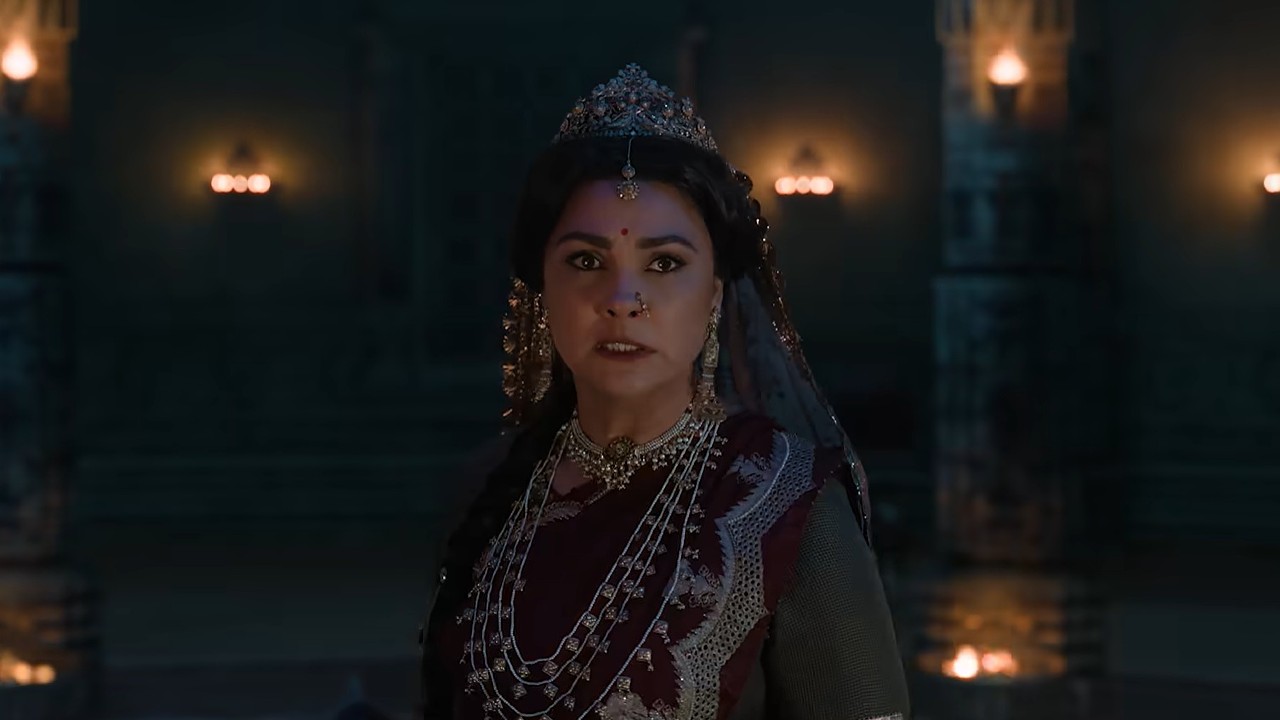
Kaikeyi has often been remembered as the woman whose demands changed the course of the Ramayana. Her decision to send Rama into exile and place Bharat on the throne has made her one of the most debated characters in the epic. In Nitesh Tiwari’s latest outing Ramayana, Lara Dutta steps into the role with an attempt to look beyond that familiar image.
Recently, in a chat with SCREEN, the actress opened up about the character’s backstory, her complicated relationship with Manthara and the challenge of portraying such a steep emotional journey within only a few scenes.
For Lara, one of the most important aspects of Kaikeyi is her affection for Rama. The film establishes this through her interactions with him from childhood and her happiness when he is chosen to become the heir to Ayodhya.
“Nitesh has depicted Kaikeyi on screen with sensitivity and delicacy. It’s been depicted in many versions that Kaikeyi loved Rama, possibly more than even Bharat. He was always her favourite,” Lara told the publication.
She also pointed out that Kaikeyi initially has no problem with Rama becoming king. “Kaikeyi never objected to Rama being declared the heir to Ayodhya. It was a joyous occasion for her,” she said.
It is Manthara, played by Sheeba Chaddha, who becomes the catalyst for the change that follows. Lara believes Kaikeyi’s journey cannot be understood without looking at the deep history she shares with Manthara.
“Sheeba Chaddha, what an actor! Without Manthara, the arc of Kaikeyi wouldn’t have been solidified. Both these characters go hand in hand. The history between them is so deep. Manthara may have been small-minded and manipulative, but her influence on Kaikeyi was immense. It’s a very intricate, complex relationship,” Lara was quoted as saying.
According to the backstory given to the actress for the character, Kaikeyi was the only daughter in a family of men and lost her mother during childbirth. Manthara raised her, making their relationship much deeper than that of a queen and her nurse-maid.
Lara explained, “Kaikeyi was the only daughter born in a family of men. She lost her mother at childbirth. She was raised by Manthara. Therefore, her relationship with Manthara goes beyond just being a nurse-maid. She was, in many ways, a mother figure.”
Kaikeyi was also raised as a warrior princess and became a skilled charioteer. She drove the carriages of her brothers and later Dasharatha after their marriage. Lara recalled how Kaikeyi once saved Dasharatha on the battlefield, following which he promised to fulfil a wish for her.
“When she saved him from the battlefield once, he promised to fulfil her wish as the king’s word. At that time, she said it was just her duty,” Lara said. There was another promise connected to Kaikeyi’s marriage. The actress explained that her father had initially been reluctant to marry his daughter to a king who already had two queens.
“When Kaikeyi asked for Dasharatha’s hand in marriage, her father didn’t want her to be the third queen of a king because he knew that in those days, alliances were made purely through marriage,” she said.
Dasharatha then promised Kaikeyi’s father that her son would inherit Ayodhya’s throne, irrespective of whether he was the eldest. For Lara, this places Kaikeyi in an extremely difficult position when Rama is named the heir.
“She was caught between her love as a mother and her duty as a mother to enforce what was her son’s birthright. If she didn’t fight for her son, in a massive kingdom like Ayodhya, where there was so much intrigue and court politics at play, he’d lose what was promised to him at birth. It’s an incredibly complex character to play,” Lara shared.
The actress also wanted to bring dignity to a character who, as she pointed out, has long been portrayed as a villain. She referred to another version of the story that gives Kaikeyi’s actions a divine purpose.
“She’s always been portrayed as a villain, but if you actually look at it, it’s said in a different version that she took birth with the divine purpose to make Lord Rama fulfil the prophecy of vanquishing Ravana and restoring peace and faith on Earth.”
Lara believes Kaikeyi is one of the most misunderstood characters in the story and also one of its most important. Without her decision, she said, Rama’s journey would have unfolded very differently.
“Because then Rama would’ve become the king of Ayodhya, ruled like any other king, and that would’ve been his history. But it was only because he was banished to the forest that all the events, including Ravana kidnapping Sita, took place. She’s such a pivotal character in the story,” Lara explained.
Despite the scale of Kaikeyi’s journey, the Bollywood actress had limited screen time to portray her transformation. That made restraint particularly important for the actress.
“Keeping it subtle and restrained, and keeping my emotions in check, was very important for me to portray those scenes convincingly, instead of overperforming. She was a loving mother first, then became a dutybound mother who had to take a firm stand to not disregard the other son. Because otherwise there was nobody else to fight for her son, for what was he rightfully due,” Lara said.
The emotional challenge became greater when Kaikeyi finally began to understand the consequences of what she had demanded. Rama was committed to honouring his father’s word and, by then, Kaikeyi could no longer simply take back what had been set in motion.
“By the time she had summoned all her courage to ask for what she wanted, she saw what it actually entailed. It was too late because Rama was also bound by dharma, his father’s word. By the time she felt the remorse, the wheels of history had already been put in motion. It was incredible to play that on screen. The performance had to be finely nuanced. It was such a joy as an actor. When you see the audience cry, feel that pain, and sense that remorse during the vanvas departure scene, it means the highest accolade for me, more than any written praise,” Lara said.
Even something that was never shown in the film helped Lara think about Kaikeyi after the consequences of her actions became clear. She wondered what might have happened to her relationship with Manthara after Rama left for exile.
“Though it wasn’t shown on screen, I think about whether Kaikeyi would’ve let Manthara go or let her stay by her as a constant reminder of her guilt and remorse. That’s such a beautiful visual to introspect on because it helps you add layers and bring in nuance to your character,” Dutta was quoted as saying by the portal.
Ramayana brings together an ensemble cast, with Ranbir Kapoor as Rama, Sai Pallavi as Sita, Yash as Ravana, Ravi Dubey as Lakshman, and Sunny Deol as Hanuman.
