


Ishhan Dhawan and Debchandrima Roy Singha deliver an explosive first episode of Yeh Fitoor Tera.
Quick Vibes
Genre: Romantic drama
Vibes: Viscerally tense and volatile
Credits
Cast: Ishhan Dhawan, Debchandrima Singha Roy, Mohit Duseja, Aman Verma, Sanjeev Seth, Rinku Ghosh, Eindraneel Bhattacharya, Arnav Maggo, Farida Dadi, Gunn Kansara, Ishani Bannerjee.
Director: Arshad Khan
Concept: Ved Raj
Episodic Story-telling: Pavni Mehandiratta, Malavika Asthana
Screenplay: Bhavna Vyas
Dialogues: Shivangi Singh
Editor: Shashank Singh
Costumes: Ritu Deora, Karishma Salian
Cinematography: Sarfaraz Meghani
Creative Team: Janhvi Aasthana, Sankalp Gala
Streaming Platforms: Star Plus, JioHotstar
Canvas (World Building And Atmosphere)
The first episode of Yeh Fitoor Tera throws you straight into a head‑on clash of two worlds. Saumya (Debchandrima Singha Roy) lives in a tug-of-war. Her character is driven by a deep conflict between trauma, hyper-vigilance, and a desire for self-actualization. Anxiety is her shield against a world that feels unsafe.
Her father sees her as the family’s pride and moral anchor, and that weight sits heavy on her shoulders. Yet she chooses a co‑ed college, hoping to build courage. Her stubborn honesty gives her control, and her hidden strength shows through the cracks of her fear.
Saumya’s home feels more like a cage than a comfort. The rules run the house, tradition calls the shots, and every move is watched. It’s a world of control, authority, and constant eyes on her emotions.
On the other hand, Jeet (Ishhan Dhawan) is all fire and mischief. He loves breaking rules, mocking authority, and pulling stunts in public. His sharp mind reads people quickly, and his sarcastic humor tears down walls. Yet, every now and then, a softer side slips through, hinting at emotions he tries to hide. Deep down, there is a subconscious craving for the stability and truth missing in his life.
The leads are surrounded by a lively mix of characters. Saumya’s strict father (Eindraneel Bhattacharya) guards family honor, while her phone‑obsessed brother (Mohit Duseja) tries to support her but often slips up. Pakhi (Ishani Bannerjee), her street‑smart best friend, brings clever college hacks. Her conservative uncle (Aman Verma) is definitely more than meets the eye, and her caring mother offers quiet strength. The college principal (Sanjeev Seth) keeps losing battles against Jeet, with a subtle hint of history between them. Together, they build a world of rules, distractions, and sparks of rebellion.
Portraits (Performances)
Ishhan Dhawan brings a quiet depth to Jeet. What makes it stand out is how he plays against his own real-life introverted nature. Because the actor naturally leads with internal processing, his Jeet never feels like a hollow bully. You can see his eyes busy reading the room, underneath the chaotic swagger, and sarcastic smirks.
Debchandrima Singha Roy, meanwhile, pulls off reverse acting. Off screen she’s lively and outgoing, but as Saumya she folds inward. She shrinks her posture, guards her gaze, and clutches her dupatta like armor. Her performance turns anxiety into physical detail. By channeling her natural vibrancy into a quiet, stubborn resilience, she also ensures Saumya’s moral stance feels firm and unyielding.
Together, their opposite natures light up the screen. Debchandrima’s extroverted confidence fuels Saumya’s quiet strength, while Ishhan’s introverted focus gives Jeet’s rebellion a calculated edge.
Reaction (Lead Chemistry)
The chemistry between Ishhan Dhawan and Debchandrima works so effectively because it is built entirely on friction rather than instant attraction. Their push‑and‑pull dynamic keeps the screen alive. Their physical chemistry relies heavily on the tension of personal boundaries. Because Saumya is hyper-vigilant and physically guarded, every time Jeet steps into her space, the screen presence becomes instantly charged.
There is a fascinating rhythmic interplay in how they react to one another. Ishhan doesn’t play Jeet as intimidated or genuinely angry with her. Instead, his eyes light up with an amused curiosity whenever Saumya tries to stand her ground. Debchandrima meets his swagger with quiet resistance. Even when her body shows fear, her eyes stay fierce. They deliver sharp judgment, refusing to give Jeet the satisfaction of total submission.
Jeet runs wild with chaotic freedom but lacks grounding or real connection. Saumya, on the other hand, is rooted in discipline and moral clarity but trapped by anxiety and outside control. That hidden need for what the other embodies is what fuels their spark.
Lens (Color Pallete And Cinematography)
Saumya’s home is wrapped in warm beige, muted gold, and natural wood. These tones usually suggest comfort but here, they feel drained, heavy, and claustrophobic. The camera stays close, eye‑level, catching every flicker of her grief and anxiety.
But once she steps outside, the mood flips. The camera grows restless. Her gaze shifts too. It’s downward at home, but alert and darting in the outside world, signaling a move from quiet despair to survival mode.
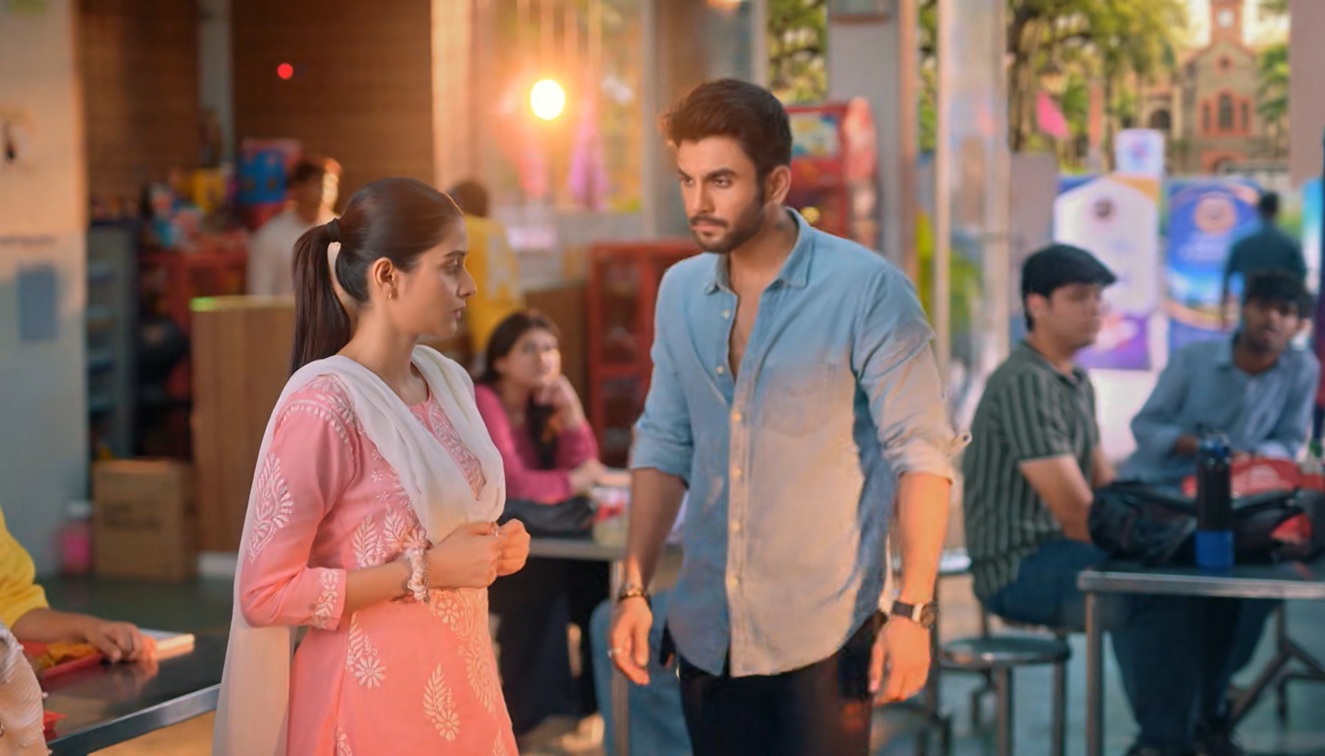
In the first episode, her costume ties it all. A pastel/muted pink kurta with a plain white dupatta speaks of fragility and innocence. Indoors, it blends into the muted walls, showing how her identity is swallowed by family pressures. Outdoors, the same soft outfit stands out against harsh backdrops, highlighting her isolation and vulnerability.
Jeet’s shirtless frames glow with sun‑kissed skin and raw ink across his back. It adds a chaotic texture that instantly grabs attention. When dressed, he turns to denim, light blue over dark jeans. Blue signals cool confidence, rebellion, and grounded masculinity.
When placed beside Saumya, the palette speaks louder than words. His denim blue sits opposite her pastel pink, and gives a clash that radiates “opposites attract.” She carries delicate warmth, he brings untamed force, and together they spark visual tension.
The camera tilts in his favor with sweeping low angles that make him appear larger than life, while Saumya is kept smaller in the frame. The over‑the‑shoulder close‑ups push him into her space, forcing us to feel the weight of his stare. His visual language is loud, raw, and restless. Unlike Saumya’s downward glances and hesitant side‑looks, Jeet’s eyes never waver. Whether leaning in or looking back, his gaze is razor-focused.
One only wished the episode had skipped those few AI‑generated shots to show locations.
Cut (Direction, Editing And Editing)
The direction runs at full throttle right from the first minute, never letting the story breathe easy. The scenes shift quickly from tense family pressure to explosive campus clashes, yet the rhythm stays tight and cohesive. The director, Arshad Khan, wastes no time on fillers. Every frame works like an emotional barometer, pulling the audience straight into the leads’ inner worlds. He ensures the show’s explosive pace never comes at the expense of its emotional heart. Khan’s prominent previous works includes TV soaps like Iss Pyaar Ko Kya Naam Do, Saraswatichandra, Pandya Stores, amongst others.
The writing of Yeh Fitoor Tera is crisp in the first episode. Jeet’s lines lean heavily into playful sarcasm. The dialogues shine brightest when there’s a faceoff between him and Saumya.
To Watch Or Not To Watch (Verdict)
Yeh Fitoor Tera runs on two obsessions. Saumya clings to safety and moral order, her panic guiding every move. Jeet chases control and wild freedom, breaking rules with wit and reckless stunts. Their clash powers the first episode, which ticks all the right boxes. The real thrill now is watching who cracks first—will Saumya’s fortress give way, or will Jeet’s chaos finally find its anchor? Either way, it’s a thumbs up from us.
