








Jeet treats Saumya’s hair tie with more reverence than her entire family treats her boundaries. Read our Week 8 review of Yeh Fitoor Tera, starring Ishhan Dhawan and Debchandrima Singha Roy.

Credits
Cast: Ishhan Dhawan, Debchandrima Singha Roy, Arnav Maggo, Mohit Duseja, Aman Verma, Sanjeev Seth, Rinku Ghosh, Eindraneel Bhattacharya, Farida Dadi, Gunn Kansara, Ishani Banerjee, Renee Arora, Neha Narang, Rahul Ailani
Director: Arshad Khan
Concept: Ved Raj
Episodic Story-telling: Pavni Mehandiratta, Malavika Asthana
Screenplay: Bhavna Vyas
Dialogues: Shivangi Singh
Editor: Shashank Singh
Costumes: Ritu Deora, Karishma Salian
Cinematography: Sarfaraz Meghani
Creative Team: Janhvi Aasthana, Sankalp Gala
Streaming Platforms: Star Plus, JioHotstar
Plot Recap (Episodes 46-51)
The week opens with Saumya in high anxiety, praying to Durga Maa for her father’s safety. A baby’s cry inside the hospital first brings relief, showing Anup saved a life. But the relief quickly turns into fury when the patient’s family accuses him of negligence. The crowd tears Anoop’s shirt and even roughs up Saumya. Jeet snaps and beats down the attackers until security and Anoop himself break it up.
The fight makes things worse. Dr. Awasthi and the Medical Board accuse Anoop of hiring goons, and Roop mocks the family, saying no one will marry the daughter of a disgraced doctor. Anoop is left shattered, fearing the loss of his license under Ashish Malhotra’s enquiry. This sparks a bitter clash between Saumya and Jeet. She blames him for ruining her father’s name. He insists that he was protecting her. She says anger is not protection. Hurt, Jeet tells her to stay away. Yet behind the scenes, he starts digging into Ashish Malhotra, secretly planning to save Anoop’s career.
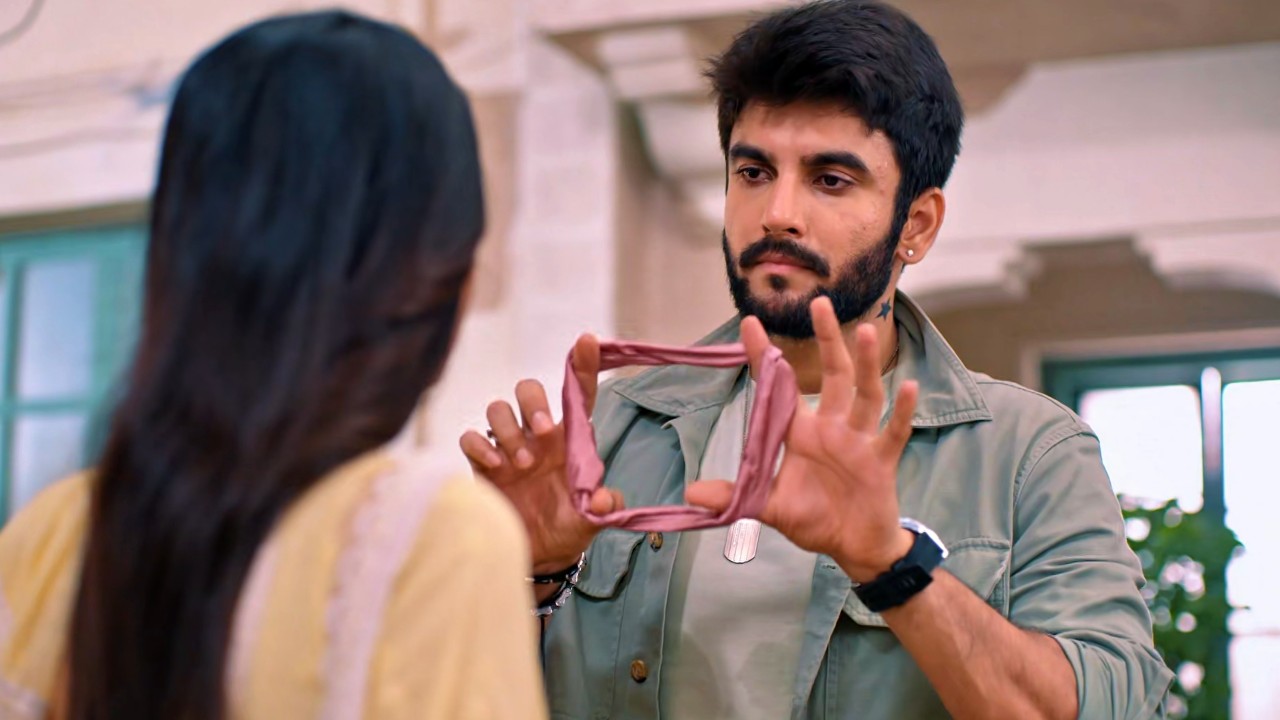
When Saumya tries to give him a birthday card, Jeet holds her hand with her hair crunchie, brings her to the terrace and burns it in her hand. He reminds her of his ruined childhood and warns her that staying close will only worsen things. Saumya later notices his missing bike and gets worried that Jeet might make things worst for her father in his anger.
Meanwhile, Reva schemes to make Ridhan dependent on her, unaware he is preparing to propose to Saumya. At the Mathur house, Roop keeps mocking Anoop’s downfall as Anoop heads to the enquiry. Torn between her duty to her father and her pull toward Jeet, Saumya turns again to Durga Maa, hoping truth and dignity will win.
Jeet storms into Dr. Malhotra’s board meeting without warning. Acting casual, he rambles about needing “treatment” because his wife called him for an ice cream date. Malhotra is left confused, but beneath the odd act, Jeet cleverly shifts the tone. He pushes the board to remember Anoop’s past work and follow proper rules. Thanks to this hidden move, Anoop walks out with only a mild warning instead of losing his license. Saumya later learns the truth and feels guilty. When she tries to thank him, Jeet shuts her out with his earphones. She shows her gratitude quietly by cleaning his bike.
Ridhan, ready to propose to Saumya, is stopped by Reva. She warns him that Saumya may mistake his proposal for pity after her broken engagement. Ridhan agrees to wait, while Reva secretly plans her own move. At home, Ridhan confronts Sanjeev for his infidelity in the past. Dadi scolds Sanjeev for cursing and disowning Jeet on his birthday, calling it shameful.
Saumya, determined to make Jeet’s birthday special, teams up with Ridhan and Krish. They plan a surprise party disguised as a team bonding event. She tells everyone not to wish him directly. When a girl hands Jeet a rose, Saumya quickly says it is Pankti’s birthday instead. Roop stirs Anup’s worries about Saumya’s late nights, but at the party, the mood is light. Saumya handles rowdies with her formal Hindi and joins a fun game of “Never Have I Ever.” She drinks bitter karela juice instead of beer to match Jeet’s challenge. Music and laughter fill the room, and for a brief moment, Jeet and Saumya share pure joy in the middle of all the family chaos.
The party continues with a playful game. Jeet asks sharp questions and uncovers that Saumya has stalked someone online. Pakhi assumes that it must be Ridhan. Saumya stays quiet, and Pakhi pushes her to dance with Ridhan. On the dance floor, Ridhan tries to show his feelings through his moves, but Saumya misses the hints. Nita secretly receives a photo of Saumya, Ridhan, and Jeet, then cruelly crops Jeet out. Sensing Saumya’s discomfort, Ridhan steps back. Jeet takes over, and Saumya lights up with joy as she dances with him, forgetting her troubles while he admires her confidence.
Later, Saumya sends Jeet a birthday wish from a fake profile. He reads it and feels her presence. Then another message arrives, appearing to be from Sanjeev. Hungry for his father’s affection, Jeet rushes to him, only to be crushed when Sanjeev denies sending it and warns him to stop living in illusions.
On the terrace, Jeet learns that Ridhan and Saumya used Sanjeev’s phone to send the fake text. He lashes out at Saumya, accusing her of reviving a hope only to destroy it again. He says he was fine in his solitude until she made him believe his father cared. Saumya is left in tears, drowning in guilt. She breaks down to Ridhan, realizing Jeet hides his pain while noticing everyone else’s.
Meanwhile, Roop prepares his next attack at Anoop. Jeet sits by a bonfire, heavy with anger. Ridhan confronts him over Saumya’s tears. However, the tension between them quickly melts away when Jeet realizes that Ridhan has been secretly in love with Soumya since childhood. Hearing his brother struggle to share his feelings, Jeet encourages him to be brave and propose. Ridhan reminds him that before any romance, Jeet must first make peace with Saumya and heal the hurt caused by their fight.
On the terrace, Saumya watches with joy as Jeet lights a candle on the cake she made for him. He playfully demands that she sing before he cuts it. As she sings, their walls fall away. Jeet smashes a piece of cake and feeds her the first bite, hoping it softens the harsh words he once threw at her. When Saumya apologizes, Jeet assures her that she made his birthday special.
Their peace shatters when Anoop arrives with Roop. Seeing them together, Anoop explodes. He begs Soumya to stay away from Jeet, terrified of disgrace. Roop seizes the moment and hurls vile insults, accusing Soumya of making the first move and even claiming she spent the night with Jeet. Unable to bear it, Anoop slaps Roop.
Saumya runs away in tears. Roop, humiliated, turns vicious. He pours boiling water on his own leg, vowing to frame Anoop’s family and destroy them. Inside, Anoop expresses his regret over slapping his elder brother. He considers moving out with his family, but Madhu warns that running will only trap them further. Jeet steps up, urging them to stop letting Roop control their fear. He explains the same to Saumya as well. When she tries to explain that they cannot completely ignore the rules and regulations of society. Jeet tells her that the world can be harsh and warns her that Roop will continue disturbing them by using society and people’s opinions against them.
Meanwhile, Roop burns with rage after the fight. He channels his humiliation into a dramatic raag, blaming Jeet for breaking the peace and corrupting the family. His vow of revenge unsettles Madhu and Uma, who fear what he might do next. Ridhan then bumps into Jeet by chance. Jeet seizes the moment and urges him to stop hiding his feelings and confess his love for Saumya. Ridhan hesitates, afraid of rejection. Jeet playfully shows him how it is done, striking a Shah Rukh Khan pose and shouting his love into the air.
The fun turns into chaos when Jeet sees Saumya standing behind him with the whole family listening. Anoop mistakes the act for a real proposal and grabs Jeet by the collar, accusing him of tricking his daughter. To calm the storm, Jeet swears on his Nani that he does not love Saumya and never will. He declares that he only loves himself and will never enter a romantic story.
Jeet then turns to Ridhan, warning that his silence is hurting everyone. Ridhan gathers courage and confesses the truth. He tells everyone that he has loved Saumya since childhood, and Jeet was only helping him speak up. Ridhan asks for Saumya’s hand, promising Anoop and Madhu that he will protect and cherish her. Jeet supports him fully, vouching for his character and saying that he will be a wonderful husband. Ridhan adds that he will wait patiently for Saumya’s decision.
The proposal shocks the Mathur family. Saumya panics, unable to see her childhood friend in a romantic way. Madhu urges her to accept, but Anoop insists that the choice must be hers alone. Roop then hands Anoop the house papers and announces that he will move to the village. Madhu and Uma remain suspicious of his sudden change.
As the family prepares to shift downstairs, Krish gently asks Saumya why she hesitates if Jeet is only a senior to her. Saumya feels trapped between family expectations, Ridhan’s heartfelt proposal, and her complicated bond with Jeet. The pressure builds as everyone waits for her answer.
A restless Ridhan chugs beer cans as he anxiously waits for Saumya’s answer to his proposal. Jeet tries to calm him, saying a true gentleman speaks his heart and leaves the choice to the girl. He reassures Ridhan that Saumya will say yes and even jokes about couple hashtags like Sauman, Hariya, or Harisa. The mood breaks when Sanjeev arrives and cruelly suggests “Jeetdhan.” He accuses Jeet of provoking Ridhan and using him for revenge. Then he strikes harder, saying no father would give his daughter to a goon like Jeet and that Jeet is destined to stay alone forever. Jeet stays silent and hurt, as Sanjeev drags Ridhan away. At the Saxena mansion, Ridhan announces his proposal. Dadi, Nita, and Pakhi are happy. When Sanjeev confronts Nita for going to the Mathurs with Ridhan’s marriage proposal without his approval, she reminds him how he took Ridhan’s proposal to Reva without asking her.
The next morning, Saumya finds Jeet still shaken by Sanjiv’s words. She tries to care for him by mentioning the kitchen items she organized, but Jeet cuts her off, saying he prefers to be alone. Soumya walks away, hurt, and admits to herself that her own life feels like a storm. She tells Madhu to make sugar parathas instead of aloo ones, signaling her yes to Ridhan’s proposal. Madhu is thrilled and rushes to share the news. Krish overhears and confronts Soumya, warning her that she is lying to herself and only accepting Ridhan to escape her feelings for Jeet. Meanwhile, Taiji sees Roop making a secret deal near the window. Madhu assumes it is a travel agent, but Roop quietly keeps his revenge plan alive.
As the Mathurs prepare shagun plates, Roop offers silver coins to Anoop, saying his train is delayed. Anoop rejects him and bars him from joining, declaring he is no longer part of the family after his despicable act with Saumya. Near his bike, Jeet works on the engine when Saumya arrives in a yellow suit. She tells him that she accepted Ridhan’s proposal. Jeet congratulates her. As she leaves, her dupatta brushes over him. He notices her scrunchie on the ground, wipes it clean with his shirt, and slips it back onto her wrist without touching her. He gently says she always gets restless without it. Before they part, Jeet warns her to look back once before stepping into a new life, so she does not leave behind something she will regret searching for later. Saumya walks towards the Saxena mansion while Jeet returns to his bike.
Character Development
Jeet’s journey this week is a study of how pain shapes his choices. Vulnerability has always meant hurt for him, so his first instinct is aggression. When the mob attacks Anoop and Saumya, he fights back not only out of rage but because action gives him control in a world that feels unsafe. There is a wound of worthlessness beneath his tough exterior that is constantly weaponized by Sanjeev. Being told that no father would give his daughter to a goon like him and that he will die alone strikes at his deepest fear, the belief that he is unlovable.
On the surface, Jeet calls out Anoop’s harsh behavior and Saumya’s desperate need for her father’s validation. Yet the story reveals his own hypocrisy. He is trapped in the same prison. The fake text sequence exposed him completely. For a moment, he believed his father had written him a kind note, and his tough mask vanished. His eyes showed raw hope, proving that despite his cynicism, he is just as starved for paternal love as Soumya. She copes with rejection by pleasing and submitting. He copes by rebelling and sabotaging himself. Both are defined by the love their fathers refuse to give.
This shared wound changes their bond. At first, Jeet was the detached observer, shaking Saumya out of her blind loyalty. She was the passive listener. He held the upper hand. Now that his own vulnerability is exposed, that distance is gone. He cannot lecture her about chasing her father’s approval when his own heart breaks over a fake gesture from Sanjeev. They are no longer savior and victim. They are two broken people carrying unhealed childhood scars. His anger at her is also anger at himself.
Jeet survives in the grey. He believes that ends justify chaotic means. When Anoop’s license is at risk, he storms into a board meeting, using unpredictability and sharp instincts to save him. To the world he looks like a goon, but he is the only one who can protect Anoop’s career. He performs sacrifice while framing himself as the villain. Swearing he cares only for himself, hurling insults—these are acts of deception. He knows if Saumya sees his gentleness, she will cling to him and lose her standing. So he hides in shadows, saving her dignity and her father’s career while letting the world, including Sanjeev, see him as worthless.
The tension of Yeh Fitoor Tera lies in this ambiguity. When Saumya’s hair scrunchie falls, he cleans it and slips it back on her wrist, showing he remembers her small anxieties. When he performs the SRK pose, he shouts words of love but shields them under the excuse of coaching Ridhan. He pushes Ridhan to confess, building a safe future for Saumya even if it means isolating himself. He does not simply step aside. He designs his own exile. His final words to Saumya, asking her to look back once before moving forward, carry both truths. They are the quiet confession of a man slowly falling for her and the warning of a protector who knows she may be leaving behind the only person who understands her pain.
This blurred line makes Jeet compelling. If it is romance, it is a love turned against his own desires, where every harsh act is punishment. If it is attachment, it is the instinct of a broken man seeking redemption by protecting someone who sees his humanity. Jeet himself may not know where one ends and the other begins. He is starved of affection, so any deep feeling feels dangerous. That ambiguity is the heart of the show. It keeps him alive in the grey space between tragic lover and wounded guardian, making every gesture layered with meaning.
Highlight Of The Week
This week, Yeh Fitoor Tera builds its emotional arc around one symbol—the hair scrunchie. It becomes the thread that ties rejection, restraint, and devotion together.
At the beginning of the week, the scrunchie is used to push Saumya away. She carries the birthday card Jeet had bought for himself, a sad reminder of how he tries to comfort himself in a family that forgets him. Hoping to reach out, she approaches him after the hospital assault that ruined her father’s reputation. An upset Jeet grabs her by the scrunchie, drags her to the terrace, and burns the card with her own hands. In that moment, the scrunchie becomes a wall. He destroys his own fragile token of self-love to prove that closeness to him will only hurt her.
By the end of the week, the same object changes meaning completely. After agreeing to marry Ridhan out of duty and pressure, Saumya meets Jeet near his bike in a yellow suit to tell him. As she leaves, her scrunchie slips off and falls to the ground. Jeet picks it up, wipes it with his shirt, and gently slips it back onto her wrist without touching her skin. He quietly notes that she always gets restless without it. That small observation shows how deeply he notices her, far beyond his harsh words and claims that he only cares for himself. He knows her habits, her anchors, and what makes her feel safe.
This closes the loop of the week. It begins with Jeet using the scrunchie to shatter her peace and ends with him restoring it to give her comfort. His final words, asking her to look back once before stepping into her new life so that she does not leave something behind, hang over the gesture. In that moment, he surrenders her to Ridhan but also admits, silently, that their bond cannot be erased. The scrunchie becomes the quiet proof of how much he understands and cares for her, even as he lets her go.
Yeh Fitoor Tera also delivers a striking lesson in how visuals can carry the weight of emotion. This week, the show uses objects, staging, and recurring motifs to mirror the chaos and grief binding Jeet and Saumya.
Making Saumya hold his self-gifted birthday card to the flame with her own hands is far more than an outburst of Jeet’s rage. It is a brutal, physical deconstruction of her idealised view of him. He wants to burn away her illusion that his deep-seated pain could be smoothed over by sweet, superficial gestures while her family continues to treat his core dignity and self-respect as disposable. By making her hold the card as it consumed itself, Jeet ensures that she feels the literal heat of his anger, driving home the lesson that entering his life comes with real, painful consequences.
This high-voltage emotional conflict finds its visual counterweight during Jeet’s birthday party, where the staging relies heavily on subtle atmospheric contrast. By placing a static gramophone right in the center of the frame and setting it against a throbbing, pulse-like background score, the scene visually articulates the double lives of its characters.
On the surface, at the party, Jeet, Saumya, Ridhan, Reva, Krish, Pakhi, and Tanya maintain a composure of social grace, games, and polite laughter. Yet, the contrast between the unmoving object and the restless audio underline the truth. Beneath their calm exteriors, their internal worlds are in total disarray, driven by suppressed love, and unconfessed truths.
You also have the show’s recurring motif of flying cloth (sometimes Saumya’s dupatta), used consistently as a visual proxy for emotional boundaries that are constantly breached. Fabric, by its very nature, is fluid, light, and easily displaced by the wind, much like emotions that cannot be fully contained or controlled by sheer willpower. The flying cloth between Jeet and Saumya in their terrace argument scene physically represents the fragile, paper-thin boundaries they attempt to erect between each other, only to watch them collapse.
This motif reaches its peak in two mirrored scenes with Saumya’s dupatta and Jeet’s bike. In an earlier episode, when Jeet was thrown out of the house by Anoop and forced to live in a garage, Saumya’s dupatta swept over his bike as she passed. It was a delicate, unintentional touch that visually tethered her presence to his absolute rock-bottom, signaling that her warmth would follow him even into exile.
This week, the same image returns with a devastating symmetry. As Saumya walks towards the Saxena mansion after accepting Ridhan’s proposal, her yellow dupatta once again sweeps over Jeet while he works on his bike engine. In the earlier instance, the brush of her fabric was a quiet promise of connection when he had nothing left. Today, the exact same brush of fabric serves as a haunting farewell, sweeping over him like a ghost of what could have been right as she steps into a life built on compromise. The fluid cloth moves between them when words fail, proving visually that no matter how strictly they try to partition their lives, their emotions will always bleed across the lines they draw.
On the flipside, on the surface, Krish is meant to move the story forward, but the way he is written exposes a clear weakness. By turning him into Saumya’s unsolicited conscience, warning her that she is lying to herself and using Ridhan as an escape, the show falls into an expositional trap. Instead of being a supportive confidant, his constant commentary on her feelings for Jeet slips into mansplaining, where a male character tries to dictate how a woman should interpret her own heart.
Romance thrives on restraint and subtlety. The magic lies in glances, pauses, body language, and unsaid words. It’s interesting if the audience gets to connect the dots themselves. But the writers use Krish like a walking manual, spelling out every conflict Saumya should be allowed to reveal through her choices and silences. His dialogues rarely feel like natural conversations. They sound more like subtitles aimed at viewers, telling them exactly what to feel. This strips away the actors’ nuances and shows a lack of trust in the audience’s intelligence.
The result is a flattening of the romantic arc. Instead of a slow-burn pull, we get dictated lessons. Saumya’s agency suffers most. Her inner struggle between duty to her father and her pull toward Jeet should unfold through hesitation, breakdowns, and quiet decisions. Instead, Krish corners her and explains her emotions back to her, framing her as someone unable to understand her own life. That undermines her role as protagonist.
This reliance on Krish also disrupts pacing. The thrill of forbidden love lies in the charged silence, the near-misses, the restraint. Each time Krish steps in to decode and summarize, those spaces lose their power. The audience is robbed of discovery and treated like students being spoon-fed highlighted notes. Good storytelling leaves room for ambiguity and trusts performance and staging to carry emotional truth. By reducing longing into explicit summaries, the show, at times, trades nuance for convenience and drains the very magic that makes Jeet and Saumya’s bond so compelling.
Further, the show would gain so much more impact if it stepped away from cheap visual shortcuts. Those glaring AI-generated sky backdrops in the terrace scenes look painfully fake and break the illusion of reality.
Performances
Ishhan Dhawan is the beating heart of these episodes, and his work as Jeet stands out because of the way he treats emotion with patience and precision. The actor never reduces anger or grief to a single note, nor does he rush into breakdowns for quick drama. His performance builds like a slow crescendo.
When Jeet faces the crushing rejection from his father on his birthday, Ishhan does not leap into tears. He begins with restraint—a sharp intake of breath, a sudden stillness, a glazed look that shows the shock rippling through him. From that quiet base, he layers the intensity step by step, letting suppressed trauma, helplessness, and resentment simmer until it finally erupts into fierce protectiveness for Saumya.
Ishhan holds the camera with ease even without dialogue. His shifts in posture, micro-expressions, and heavy silences become his language, communicating the storm inside. Ishhan’s respect for nuance and emotional pacing ensures that Jeet’s pain and transformation never feel forced, but instead unfold with a raw authenticity that keeps the audience locked in.
Debchandrima Singha Roy gives Saumya a quiet strength that keeps the character from ever feeling fragile. Playing a woman trapped between duty to her father and her own self-respect is a difficult balance, yet she captures every shade with ease. In her softer moments, the actress brings warmth, using hesitant smiles and guarded glances to show someone fighting to hold her world together. Every frame that she occupies feels grounded and real, filled with human detail that makes Saumya’s struggle resonate deeply.
Arnav Maggo breathes genuine life into Ridhan, making him feel like a real, flawed human rather than just a plot device caught in a love triangle.
In A Nutshell
If Yeh Fitoor Tera has taught us anything this week, it’s that a hair scrunchie can endure a harder emotional arc than a Marvel superhero. Ishhan Dhawan and Debchandrima Singha Roy create sparks with the smallest gestures as Jeet and Saumya respectively, while Krish continues to pop up like an unskippable YouTube ad to decode their feelings for us.


