






Sukhwinder Singh’s chance meeting with A.R. Rahman led to the creation of the iconic Chaiyya Chaiyya song from Shah Rukh Khan’s Dil Se.

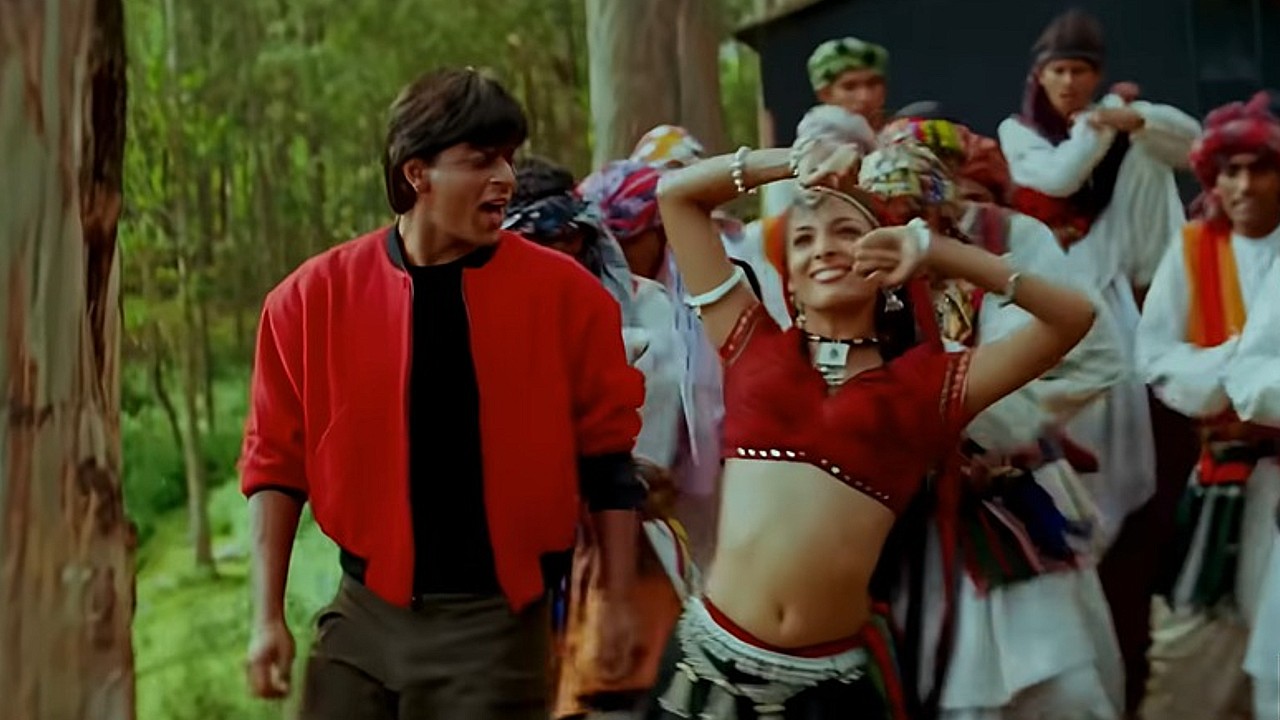
‘Chaiyya Chaiyya’ song from Mani Ratnam’s Dil Se (1999) is one of the biggest moments in Indian pop culture history. Everyone remembers Shah Rukh Khan and Malaika Arora dancing with unmatched energy on top of a moving train. A.R. Rahman’s unique rhythms and Gulzar’s beautiful words created a sound that changed Bollywood music forever. Even today, decades after its release, the track instantly makes people dance all over the world.
Recently in a chat with Mashable India, Sukhwinder Singh, the man behind this iconic track, walked down the memory lane, and shared some interesting trivia about this SRK number.
He revealed that it all started on the day when A.R. Rahman was busy recording music for director Govind Nihalani’s film Takshak. The team was eagerly waiting for a well-known writer from Punjab to arrive and write some Punjabi poetry. However, the writer missed his flight. Sukhwinder happened to drop by the studio that exact same day. Because the writer’s profile had arrived beforehand, the studio manager assumed Sukhwinder was the man they were waiting for. Govind Nihalani took one look at him and asked why he wasn’t wearing his traditional turban. Sukhwinder was confused but simply replied that he only wore it occasionally. Before he could fully understand what was happening, the director asked him to sit down and write the song. Though shocked, Sukhwinder used his deep love for poetry to quickly write something beautiful for the scene. Impressed, the director rushed inside to tell Rahman about this incredibly talented new writer.
When Rahman stepped out, he mentioned he was looking for a fresh track for an upcoming album. Seizing the moment, Sukhwinder recited a powerful composition by the famous Sufi saint Baba Bulleh Shah.
Singh shared, “I told him, “Let me recite a composition by Peer Baba Bulleh Shah sahib, Thaiya Thaiya Tere Ishq Nachaya Kar Thaiya Thaiya.” That is exactly where Chaiyya Chaiyya was born. I recited, “Chal Chaiyya Chaiyya Chaiyya Chaiyya, Ishq dera mere andar keeta, bhar ke prem pyaala peeta, aaja sajna aaja sajna, nahi te main mar gayi.”
When Rahman asked about the meaning, Singh told him that expression was the best language to understand each other. Rahman agreed, asked him to sing, and was surprised to learn that he was indeed a singer. Singh confidently told him he could start from any key.
“Even today, whenever he meets me, he asks, “Hi Sukhi, any key?” And I always say, “Any key, just give me any scale,” Singh said.
“That’s when I started singing, “Eedai… mera yaar nahi aaya, eedai mera yaar nahi aaya, ho rabba khair howe ode dam di… ho tere ishq nachaya kar thaiya kar thaiya…” and so on. That Punjabi version later evolved into Chaiyya Chaiyya. He looked at me and said, “You said it very correctly—expression and emotion truly are the best languages for understanding.” He immediately decided, “Let’s record this.” And just like that, the song was recorded during our very first meeting,” he added.
Sukhwinder said, ‘Then Rahman asked me, “Hawa mein dhoondhoon uske nishaan…Will you sing at random?” I asked, “What do you mean by random?” He explained, “I will play a music loop for you. Don’t take any specific instructions from us, just sing.” Gulzar sahib kept correcting a few words here and there, and within about 20 to 22 minutes, it was done!”
“For those who don’t know, ‘singing on a random loop’ is a technique that was largely introduced by A.R. Rahman. He takes a short piece of music that gives the right vibe for the song and sets it on a continuous loop. The beat he gave me had so much rhythm and energy; it kept hammering away in my ears, and that beat completely carried my singing. He liked the texture of my voice but wanted me to showcase versatility. He was provoking me creatively and guiding me because he is a very good singer himself. He asked me to hit the high notes. Singing “Yaar misaal-e-oos chale, paon ke tale firdaus chale…” on a high pitch was his idea,” Singh recalled.
Singh revealed that he would watch Rahman’s face while singing, as his expressions gave away approval or disapproval. A certain look meant yes, while a lowered face meant no. He emphasized that Rahman’s input was immense, calling the track entirely Rahman’s creation. Rahman’s suggestions, according to him, were flawless and worked brilliantly. He even made Singh repeat lines such as “Mera nagma nagma, mera kalma kalma…” several times in different variations until they felt perfect.
Sukhwinder also explained that hitting high notes was an essential part of Sufi compositions, and he considered Chaiyya Chaiyya to be a Sufi track. He mentioned that Gulzar sahib had corrected his Urdu pronunciations of words like “Ya” and “Da” in lines such as “Gulposh kabhi itraaye, kabhi mehke to nazar aa jaaye,” and said that the corrections were made with immense affection. He added that improvisations and variations performed on stage were vital because without them music would become a copy-paste job. According to him, improvisation could only be done by someone with a natural gift in their throat; otherwise, it would look like a circus. He explained that in musical terms these variations were called harkatein.
Singh further reflected that when a singer captured that pure, natural flow, there came a moment when they started hearing their own voice as if they were an outsider. He described it as suddenly feeling like one was sitting in the audience listening to themselves. He said that this was what it meant to become completely lost in the music, or malang, and at that point the singer had reached a spiritual state.
The singer fondly recalled, “When we finished ‘Chaiyya Chaiyya’, Rahman had tears in his eyes and kept saying, “What a voice!” That ‘Godfriend’ of mine introduced me to the entire world. If I am still singing today, performing on stage, and am whatever I am, it is solely because of A.R. Rahman. The song retained the essence and fragrance of that original Punjabi track (Thaiya Thaiya), but the way he made me sing spontaneously over that loop in just 20-22 minutes was magical. It remains the fastest song I have ever recorded.”
“Later on, Farah Khan brought in the moving train concept, Shah Rukh Khan and Malaika Arora delivered their iconic performances, and then there was me. After that song released, we stopped going to parties because performing this song became a non-stop celebration in itself,” he said.
When the movie released and the song blew up, the team gathered for the grand music launch. Sukhwinder, who didn’t watch many movies back then, saw a very charming man at the event and told Rahman that the guy looked like a massive star. Rahman smiled and said, “That is Shah Rukh Khan.” When Rahman introduced Sukhwinder as the voice behind the track, Shah Rukh hugged him so tightly that he felt like being crushed in a sugarcane press.
Directed by Mani Ratnam, Dil Se revolves around a radio journalist, Amar, who falls deeply in love with a mysterious woman, Meghna, only to discover that she is a militant with a tragic past.


