






This Cutting Shots fan special is Ishhan Dhawan unplugged—raw vibes, real talk, and unfiltered reflections on silence, self‑doubt, and the vision driving his craft.
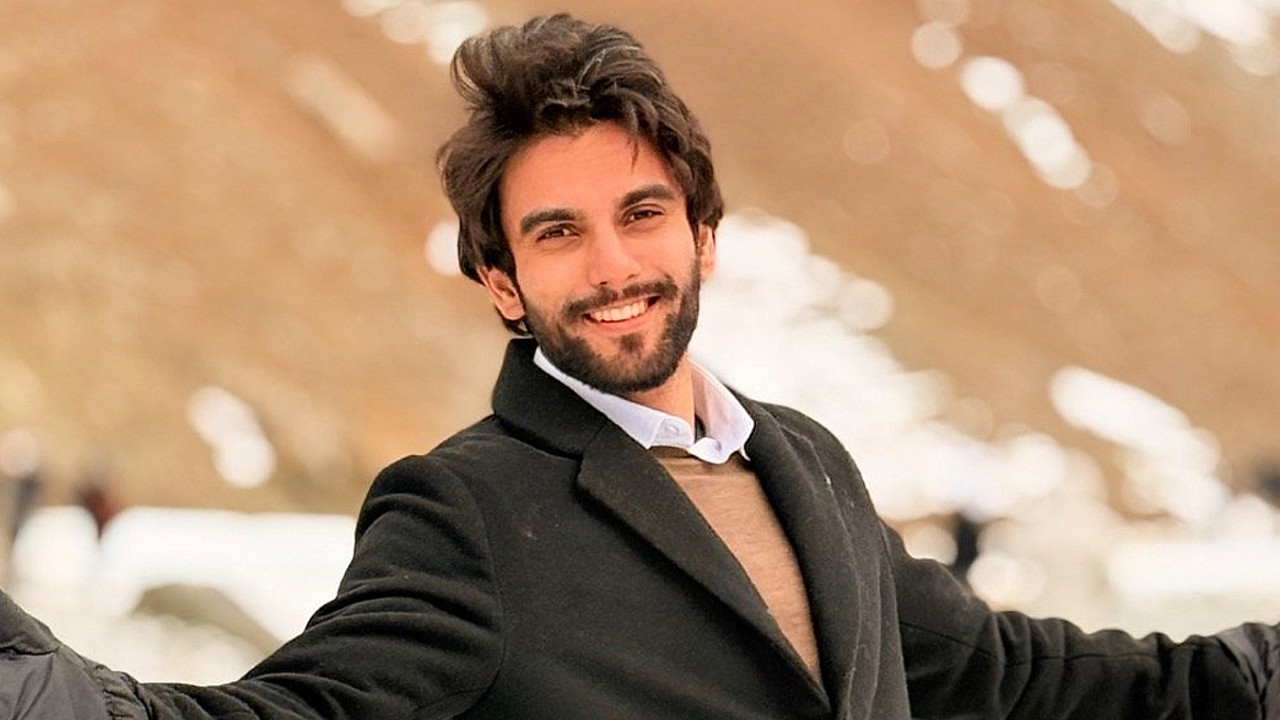

The fandom spoke, and Ishhan Dhawan listened! For this special edition, we went straight to his fans because who better than the people who’ve been with him since day one? From fun quirks to heartfelt curiosities, every question here comes directly from the inbox of his biggest supporters. Ishhan’s answers? Raw, real and refreshingly unfiltered.
At the heart of this takeover is Ishhan’s philosophy on navigating life’s chaos. He doesn’t drop generic wisdom; he delivers a metaphor to live by:
“If I’m wearing the wrong prescription and I look at a rose, it’s going to look blurry. Is that the rose’s fault? Or is it mine? We’re so quick to blame the ‘flower’—the situation, the person, the luck. But the truth is, it’s our own lens that needs correction. Life is like a rose, and within it, you are who you truly are. You just need to keep adjusting the number of your glasses (your perspective) so that you can see clearly.”
For Ishhan, clarity isn’t about changing the world; it’s about changing the way you see it.
This fan‑powered special isn’t about fame or stats. Instead, it’s about the invisible heartlines that connect Ishhan to his people. Here, he meets them exactly as he is: candid, grounded, and unmistakably authentic.
Q. If someone wants to make you smile instantly, what should they do?
A. Yesterday, something happened that really touched me. I was on my way home, and at the parking gate, the one where cars go into the lift, there was no security guard around. A lot of adults were standing nearby, but no one bothered to open the gate. I kept honking, waiting for someone to help. And then, a small child came forward and opened it.
That moment gave me a big realization. Children often do things that adults hesitate to do. We get stuck because of our ego. We think, “This is the watchman’s job, why should I do it?” But kids don’t think like that. They have a student’s mentality: they love challenges, they aren’t afraid of failure, and they don’t care about maintaining an image in front of others. For them, it’s about good deeds, about simply doing the right thing.
Watching that child made me reflect on how, as we grow older, we become ego-driven. We start measuring people by their roles or jobs, instead of their humanity. But sometimes, we need to measure ourselves by our compassion, by the small acts of kindness we choose to do.
It made me smile, and it gave me a deep sense of peace. My perspective shifted. I realized that in today’s world, even simple things have become luxuries. Take organic vegetables, for example- fifteen years ago, nobody even knew the difference between organic and hybrid. Now, something so basic is sold as a luxury. Grounding is disappearing.
That’s why yesterday’s incident felt so powerful. It reminded me that true joy and peace come from simplicity, from humanity, from doing the right thing without overthinking. And yes, it made me genuinely happy.
Q. Silence can be powerful on screen. As an actor, how do you use silence as a tool to convey emotion?
A. Silence is essential in life; not just in acting. What is acting, really? Think of it this way: right now, I’m speaking to you on the phone. If a camera were placed here, it would suddenly become “acting.” It’s the presence of the camera that makes someone an actor. But in truth, we are all actors. Life itself is a theatre, a grand play, and each of us is playing a role. The only difference is that there’s no camera recording it.
And just as silence is important in acting, it’s equally important in life. If you learn to stay quiet in certain situations, solutions begin to emerge. This is something life taught me first, and I later applied it to my craft. It wasn’t acting that gave me this lesson- it was life.
Silence helps because it keeps you free from influence. If you keep talking endlessly, without being conscious of your actions or words, you cannot do justice to your role- whether in acting or in life. You might deliver the lines, but years later, when you or your children watch that performance, you shouldn’t feel regret, thinking, “Maybe I could have done better.”
That’s why you must give your best in the present moment. There is no “better” than being fully present. If you look back later with guilt, wishing you had done more, that’s foolishness. Instead, be so conscious that you give your best right then and there. And the next day, strive to become an even better version of yourself. What you didn’t do yesterday, you should try to do today.
Silence helps me achieve that. It brings me into the present moment. And yes, it truly helps.
Q. When you step out of an intense role, how do you emotionally disconnect and return to yourself?
A. I never really step out of character. As I said, the moment I get a show, I live for that show. And when I’m not working on a show, I start preparing for the character that I feel; through intuition or gut instinct; is coming my way. Even if I haven’t worked for six, seven, or eight months, there’s this subtle sense that a certain role might be mine. And knowingly or unknowingly, I begin working toward it, so that when the opportunity arrives, I can leap into it fully prepared, and it turns in my favor.
So when I’m working, I live for the character I’m playing. And when I’m not working, I live for the character I believe is about to come. That’s why I say, I never step out of character.
Life itself is a play, a theatre. And if you live as a character within it, you learn so much more, because it’s a conscious effort. What I dislike is when people say, “I don’t even know where the last ten years of my life went.” I hate that line. I want to be the kind of person who can say, “I know exactly how each second of my life passed, because I lived every second fully.”
That’s who I am. I hold on to each moment, I live it consciously, and I never detach myself from the character I’m embodying.
Q. Here, I would like to ask you something myself. As you mentioned, since you never really step out of character, doesn’t it ever happen that the real Ishhan, the true Ishhan, gets lost somewhere? The real you?
A. Tell me this, when you were born, did you come into the world with a name? With a profession? Then what name am I really preserving? Which identity am I truly protecting? All of these things; names, relationships, legacies; are created by us. And then we spend our lives trying to protect that name, that image, that legacy of our ancestors. But in truth, an image is nothing. It’s all energy. You can become anything, you can do anything. That stagnant mindset of clinging to a fixed identity; I don’t like it.
I feel Ishhan is not a fixed entity. Ishhan is simply a medium. If the higher power has given me work through acting, then my responsibility is to give my best. And whatever it takes to give that best, I will do it. That effort, that process- that is Ishhan. Because the character itself doesn’t have the strength to exist on its own. If I say I’m playing the role of Maan Thakur – Maan Thakur cannot perform it. Only Ishhan can.
So if you ask me, “Then who is Ishhan?” Ishhan is the one who brings Maan Thakur out from within himself, who brings Kabir out, who brings Dhruv out, who brings Hamid out, who imagines and manifests the characters yet to come. That is Ishhan. Ishhan is the source.
Think of it like the sun. The sun is a source of light. But from that one source, countless things emerge. Solar energy is produced. Plants grow through sunlight, fruits arrive, and we eat those fruits. The sun gives us vitamin D. It gives energy to humans, to plants, to the entire ecosystem. Photosynthesis happens. Electricity runs through solar power. So the source is one, but the resources it creates are many.
In the same way, I am a source, and the characters are the resources. This mechanism, this awareness, is something I am grateful to the higher power for. Without this thought process, I don’t think I could ever truly do justice to my characters.
So no, Ishhan is never lost. Ishhan is the source. And I am constantly working on it.
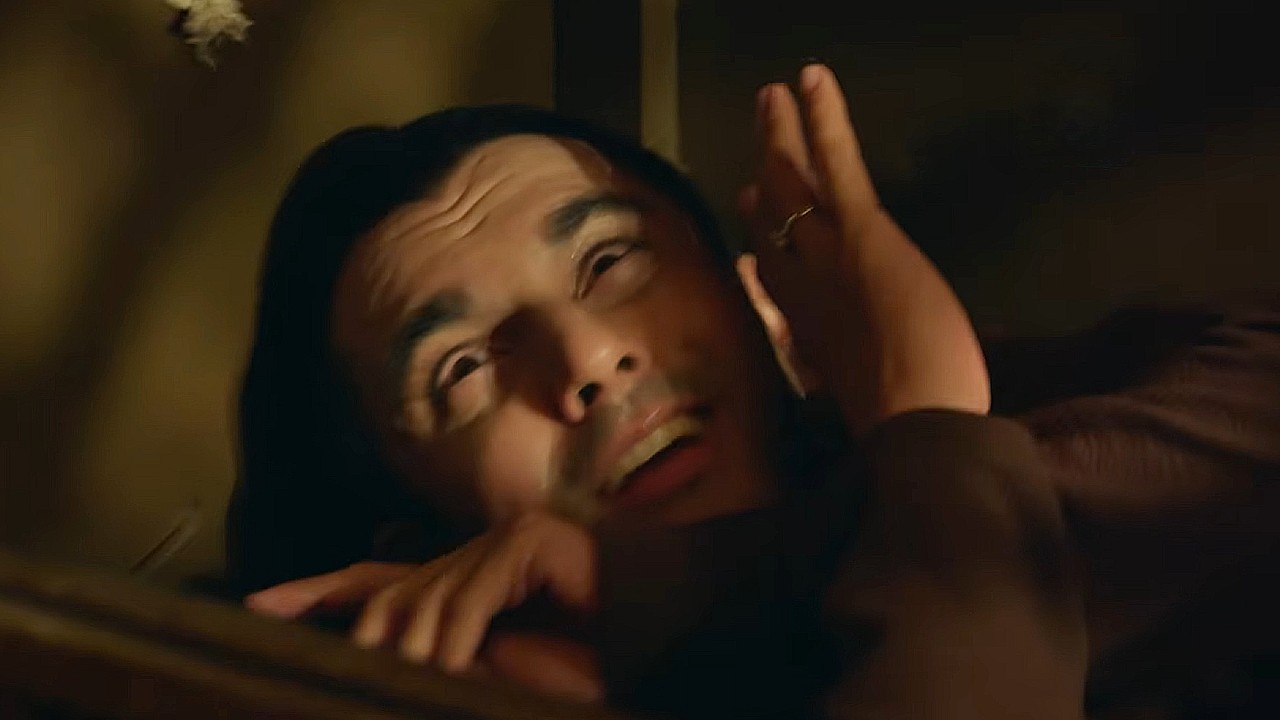
Q. So far in your journey, has there been a character that truly changed you as a person or taught you an emotion you hadn’t fully understood before?
A. When I played Baccha Dhruv in Dhruv Tara, there were no limitations. That role broke my biggest barrier — shame. When I became Baccha Dhruv, the “mad” Dhruv, I felt so embarrassed. Suddenly, I shaved my head, I went bald. My gut told me that if I went bald, I would look different. If I gained a little weight, I would look cute. If I acted mad, I would look genuinely mad. But I didn’t want to give off a cringe vibe. I wanted to give a sweet, innocent vibe, like a little child.
I had seen another show where someone played a mad character, but it didn’t look nice. Innocence matters. Wholeheartedness matters. And I realized that every actor has their own way of judging performances. I don’t judge the world; I judge myself, because my work is about me. So I analyzed and evaluated: what is a bad performance, what is a good one?
I remember Salman Khan’s acting in Kyon Ki and Tere Naam. I really liked it. I don’t know how he is as an actor overall, but in those two films, I found his acting impressive. What I observed was polarity. At one moment, he was rugged and rough, and at another, he became innocent, almost childlike. That polarity is important.
Innocence in the eyes is important. Physical appearance and tone elevates a character. Without polarity, a performance doesn’t stand out.
The first challenge is to make it different. The second challenge is to make it acceptable to the audience. But before the audience accepts it, you must accept it yourself, in your heart. You must feel that you are using your full potential.
That journey I lived; it was supposed to be a seven or eight‑day character, but it lasted one and a half months. It lasted because the audience, the channel, and the production appreciated it. And I took risks. Many people told me, “Heroes aren’t accepted bald.” But I thought, “I’m not acting to become a hero. I’m already a hero. The script will make me a hero, not my hairstyle or my swagger.”
And honestly, I didn’t make it happen. Nature did. The higher power did. I still don’t know how it happened. I didn’t have the capacity to do all that. It was done through me. I was like water, fitting into every vessel. When I was Dhruv as a bangle-seller, I fit into that vessel. When I was Baccha Dhruv, I fit into that vessel. When I was Nayak, I fit into that vessel. That transition showed me that it’s not just me; there’s another energy working with me.
That transition gave me awareness: you can be anything, but you are nothing. It didn’t give me arrogance; it gave me gratitude. Because it wasn’t me, it just happened. And that realization has stayed with me. It’s not a method, it’s an awareness.
So whether it was Baccha Dhruv or Nayak, those roles became stepping stones for my awareness and consciousness. They taught me that as an actor, awareness and realization are everything. No book can teach you that. No movie can explain it. No teacher can give it to you. It’s your own journey, your own self‑realization.
It’s a whole spiritual journey.
ALSO READ: Decoding Dhurandhar 2 Music: Beats, Battles And Big Feels
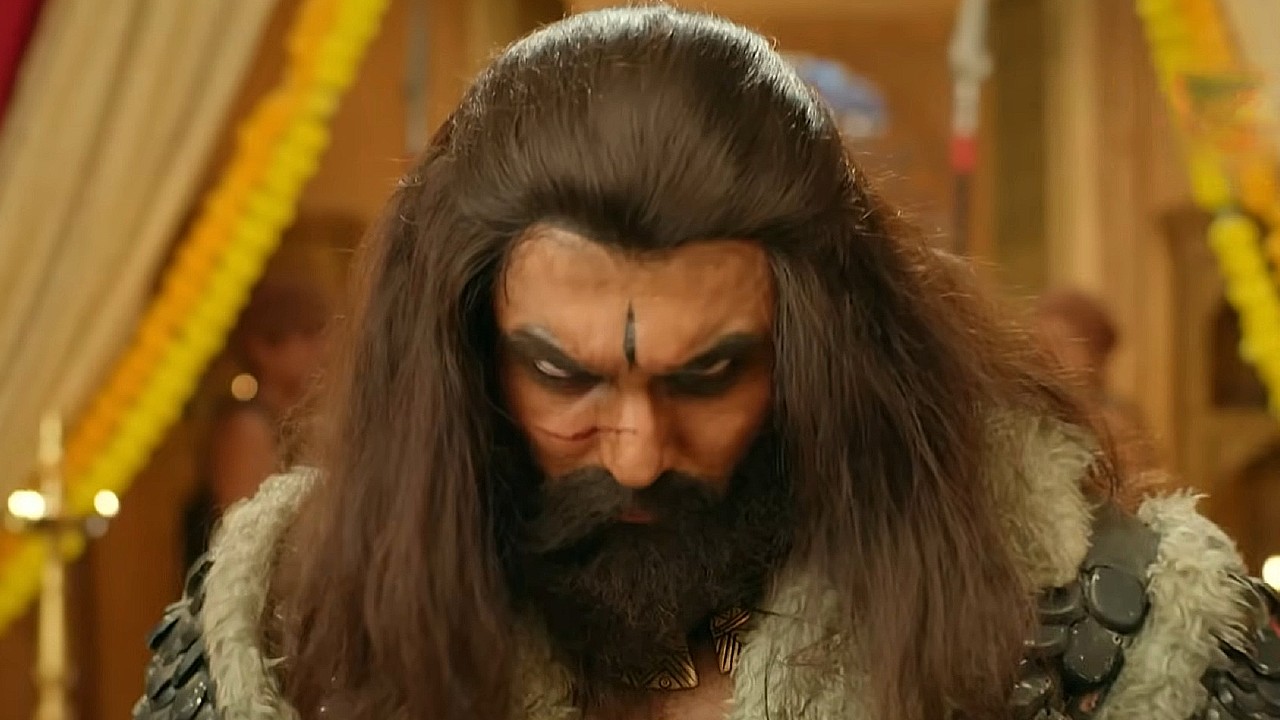
Q. What’s the most difficult scene you’ve ever performed- the one that tested you, but left you proud once it was done?
A. My first scene as Nayak was one of the toughest experiences. Before playing Baccha Dhruv, I played him. It meant leaving behind Dhruv’s character and stepping into someone completely different. I had no rehearsal, no training, nothing. I was simply handed the role and told, “This is how it will be.”
In the end, everything falls on the actor. The director can guide you, push you a little, but ultimately, it’s you who has to deliver. I kept thinking, “How will this happen? Will I be able to pull it off?” The character was supposed to be dominant, evil, witty, but with a hidden layer of truth and righteousness. That wittiness had to be shown, and the shift had to happen instantly, within a day.
I had to change everything; my walk, my gaze, my speech, even my voice. I had to make my voice heavier, not just for a few seconds, but for entire five‑minute dialogues. And I had to sustain it. At the same time, I had to keep all my senses controlled; my eyes, my expressions, my touch, my awareness of the air around me. If I slipped even once, Dhruv would creep back into the performance.
For example, if I made my voice heavy but forgot to keep my eyes sharp and raised, suddenly Dhruv would appear instead of Nayak. In Baccha Dhruv’s role, I used to stammer, widen my eyes, lower them when scared, laugh in a peculiar way. That symmetry, that spectrum of behavior, had to be completely different for Nayak. And that was very difficult.
I remember my first scene as Baccha Dhruv too — the one where I run out of the chest. It was after a 13‑hour shift. I had gone at 11 p.m. to shave my head, and by 11:30 p.m. my first scene was scheduled. Everyone was exhausted, including me. And the first scene is always the most judged; by the director, the cast, everyone. Criticism usually comes fast.
I was standing outside, waiting for the director’s “Action,” praying, “God, I don’t know how this will happen, but please make it happen.” And then I just ran into the hall, where 12–13 people were present. I had to act mad, like a child, in front of everyone who had seen me as Dhruv, the hero. It felt embarrassing. But it happened. And when I looked around, I saw tears welling up in the other actors’ eyes. They were genuinely moved.
Nobody had seen me bald until that moment. The director gave me complete freedom: “On action, just perform. No rehearsal. Just do it.” And there was pressure, everyone wanted to wrap up quickly, go home. I knew if I failed, I would be judged harshly. Inside, I was fighting with myself: “I have to end this well. Otherwise, I won’t be able to sleep.”
But in the end, everyone said, “Wow, that was too good.” I don’t know how it happened, but it did. And that’s where gratitude comes in.
For me, the first scenes are always the hardest. They carry the most tension, the most judgment. But they also bring the most joy. Once you step into the fire, the fear disappears, and you start playing with the flames.
Q. Acting often demands emotions opposite to your real mood. How do you switch gears?
A. That’s why I say an actor cannot be made through training alone. Training might give you 30–40%. Even with 100% training, you’ll only become 30–40% of an actor. The remaining 60% comes from life itself. The more genuine your experiences, the more genuinely you can mold them into your craft. That’s what craft really is; taking pieces from your personal life, adding your own visualization, and merging them into your work. This is what we call craft, approach, or method.
And once you begin practicing it, you realize that switching emotions instantly doesn’t work. Your eyes always reveal the truth.
You can fake it with glycerine, cry on cue, but emotions have a natural crescendo. They rise slowly, gradually, and then fade away slowly. That’s why I am not doing verticals right now. There, you’re expected to deliver all emotions in two minutes. It’s not possible. Acting needs time. It’s not an advertisement where you cry quickly, deliver the agenda, and move on.
My approach is to follow the crescendo — step by step. And that takes time. Nature itself works this way. A child cannot suddenly become six feet tall; he has to wait twenty years. A plant cannot instantly become a tree. The sun and moon cannot rise on command. You cannot go against nature.
Verticals may be trending now, and yes, they have their place. But for me, they don’t align with my approach. Because if emotions aren’t given proper time and attention, they won’t reach the audience genuinely. And that, to me, is injustice to the character.
Acting is trial and error, just like in the gym. You try one exercise, but if the mind-muscle connection isn’t there, you switch to another. Maybe the third exercise works; then you stick with it. Acting is the same. You test your limits, your boundaries, and that’s how you carve your craft.
Maybe in the future, if a good production creates something meaningful, I might do it (verticals). But for now, with the kind of content I see, I’m not convinced.
Q. On days of self‑doubt, when you don’t feel enough, what helps you find your strength again?
A. All those people who laughed at my failures; I cannot give them any more reasons to laugh. That’s it. That’s enough for me. For me, it’s about not feeding the demons inside me, not satisfying them. And those who are jealous of me, or those who take pleasure in my setbacks — I don’t care, but still, I feel I cannot give them that satisfaction.
It is my utmost duty. And whether I do it consciously or not, nature itself will make it happen. How? We don’t choose to be born. Nature gives us birth for a purpose. And nature is so brutal, so unfair, that whatever it has created you for, it will extract from you. You don’t need to worry.
I came to Mumbai as a software engineer. I came here to build software. But the higher power, nature, brought me to Mumbai through some path. And then, through another path, it gave me certain habits, certain traits, that made me stubborn enough to chase what I truly want. As an actor and as a human being, if I want to implement something within myself, I must sacrifice something else.
Today, my desires are not the same as those of a normal man. The kind of happiness that satisfies others does not satisfy me. My happiness is different. I feel happy when I run 10 kilometers every day. I feel happy when I go to the gym. I feel happy when I read books. I feel happy when I watch a movie or talk to my family. And above all, I feel happy when I am preparing myself for an unknown character.
I don’t know what that character will be, but the passion to prepare for it — that’s what fills me. That challenge keeps me alive. Yesterday, I ran 8 kilometers. My legs hurt. Today, I will run 8.5 kilometers. That victory between yesterday and today keeps me on edge. And I am grateful for that.
That’s what pushes me through hard times. I don’t want to repeat what I was yesterday. If I was weak yesterday, today I must rise a little higher. As they say, if you fall, fall forward. That’s the only way.
Q. Every role takes you into a new emotional world. How has this shaped your understanding of love, heartbreak, and human connection?
A. See, the simplest truth is this: first, you must know yourself. And even a lifetime is not enough for that. Until you truly know yourself, all these big terms we use; love, hate, betrayal; they may sound simple, but they are actually vast. We don’t even understand them fully.
We often want to read other people’s minds, but even they don’t know themselves completely. So how can we know them? Our ego tricks us here. Because we cannot satisfy the inner need to know ourselves, we try to fulfill it by attempting to know others. We live in denial, in an illusion, thinking, “Yes, I’ve understood that person.” But in reality, it’s our own unmet need to understand ourselves.
That’s why I say: first, know yourself. Once you do, your definitions of everything else will align. Life depends on how you want to live it. Love will take its shape accordingly. For me, love is unconditional. Betrayal and love, in my view, are part of the same energy. Think about it — whether it’s an enemy or someone you adore, both carry high intensity of energy toward a person. It’s their actions that place them on the right or the wrong side.
It’s all about energy. Energy can be manipulated, it can rise or fall. We are human. So you cannot measure love, hate, or relationships by the past or the future. They are momentary. What matters is how someone is with you in this moment. If I’m speaking with you now, what matters is how you speak to me and how I speak to you — not what will happen tomorrow.
The same applies to relationships, friendships, even work culture. That’s why people say: live in the present. But we’ve been given so many definitions that we’ve become confused. I’m still figuring it out myself — what love really is, what hate really is. To me, they are momentary states.
Life moves from the inside out. Not the other way around. We think if the world around us becomes good, we will feel good. Not possible. It begins with us. When I first came to Bombay, I thought happiness meant having a 3BHK or 4BHK flat. Today, that doesn’t matter. A house is not cement walls — it’s relationships, people. Cement walls exist everywhere. What makes it a home is the bond you build inside it.
And the stronger the relationship you build with yourself, the better you can understand and nurture relationships with others. That’s why I can never give a direct answer to these questions yet. Because I am still in the process of building that relationship with myself. And consciously building a relationship with yourself is the hardest thing.
Inside us, there are two voices — one says this, the other says that. Until that conflict is resolved, you cannot move forward. First, complete that inner work. Only then can you define the bigger terms.
Q. What detail about acting do fans rarely notice, but matters the most to you?
A. Honestly, nothing really matters to me. I just do my work. The kind of detailing I see on Instagram, the way my admirers look at me, I’ve never seen myself like that through my eyes. I even said this in an interview. Because I’m so deeply absorbed in my work, in understanding my life, myself, my craft, and God, that these surface-level things don’t make sense to me.
I don’t even think about what I’m doing after the director calls “cut.” For me, it’s only this: the higher power has sent me here for this work, and I must do it sincerely, do it well. That’s it.
The detailing comes in only if the character demands it. If it doesn’t, I don’t force it. For me, there’s no specific formula. I do what is required, as much as I can, without limits. In this case, there are no boundaries.
Q. When you feel overwhelmed, what instantly brings you peace?
A. I’m still figuring myself out, to be honest. I know my potential self exists, and I’m in that race to reach it. For me, discipline is everything. If I spend my day with discipline, I feel content. If I deviate even slightly, I don’t feel good.
Happiness, in the usual sense, doesn’t exist in my life. For me, it’s all about peace. Happiness, excitement, joy; these are just byproducts of peace. Think about it: if someone makes you happy, it lasts for a minute, but what stays longer is satisfaction, which is peace. If you feel excited about something — say, going for a run in the morning — that high lasts for a moment. But once the action is done, the reward it gives you is peace. Even when you think about it later, it gives you peace again.
That peace is what inspires you to repeat the action the next day. Your nervous system remembers the peace, and that memory motivates you. Happiness, excitement — these are dopamine spikes. But what you truly need is peace.
So I only seek peace. If I work, I want peace from it. If I achieve something, I want peace from it. For me, there is no concept of happiness, aggression, jealousy, envy, or excitement. There is only one term: peace. That’s all I want, in everything.
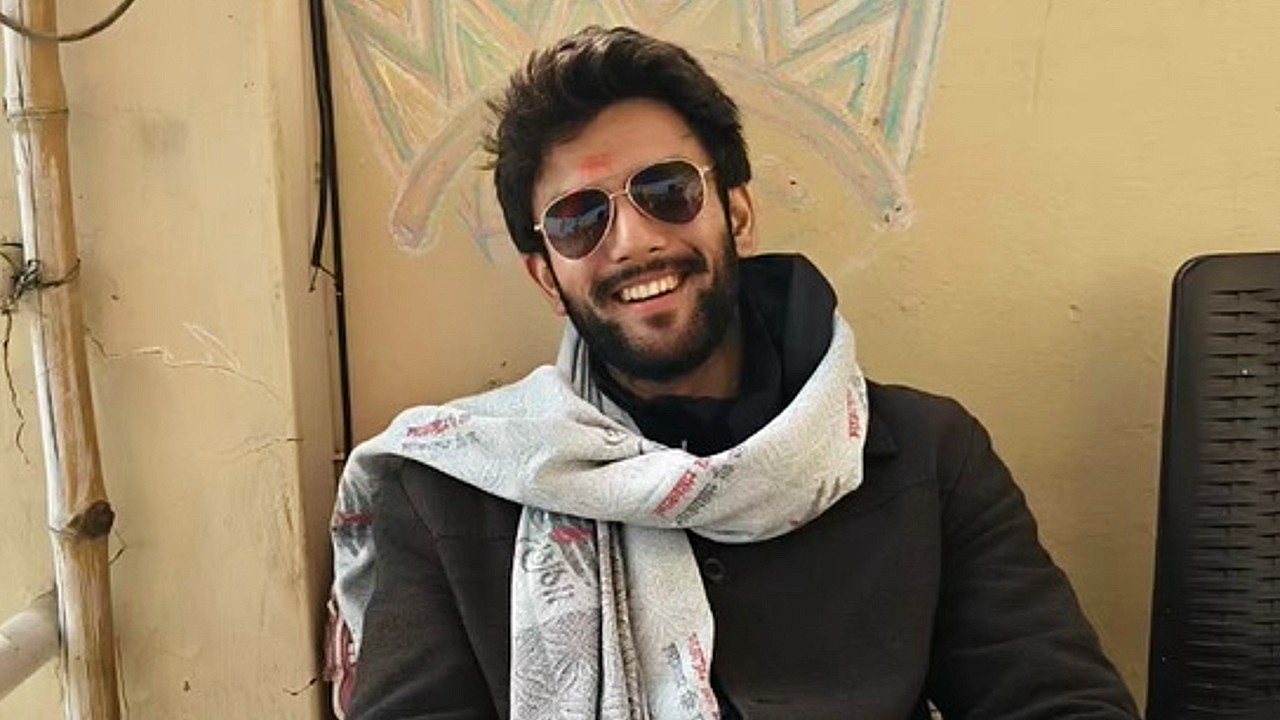
Q. Through your spiritual journey, what truth of life have you discovered? In your eyes, what is life really about?
A. You must have heard the phrase ‘Memento Mori’ — “Remember that you must die.” That feeling brings acceptance: the awareness that one day you will die. And that alone is enough.
Life is not so difficult to understand. In simple terms, what spiritually awakened me was realizing that nothing is truly in our hands. We set up pillars, chase goals, build lives, but the biggest things are beyond our control. You don’t choose where you are born. You don’t choose where you will die.
When you were born, you weighed about two and a half kilos. And when you die, you will again be two and a half kilos, in the form of ashes. The difference in grams between birth and death is the life you carry with pride and ego. That realization struck me when I visited Banaras. I saw that for just a few grams of existence, we live with arrogance, pride, and domination.
Yes, power feels good. Dominance feels good. It’s the way the world makes us feel important. But in truth, for a few grams of life, we think we must achieve something grand. Yet birth is not in our hands, death is not in our hands — so what really is in our hands? Why take tension?
I read something recently: if God has already written everyone’s destiny, then why do we pray? The answer was profound — because in some pages of your life, God has written “as you wish.” That’s why we pray. Because maybe in those moments, your request can shape your path.
So the key is to be receptive. Don’t live by what others say you should do. Your path may be completely different. Just as every fingerprint is unique, so too is every soul. If God has made even our skin unique, imagine how unique our inner spirit must be.
That’s why it’s important to face yourself, to know yourself. For me, the truth of life is this: never follow the crowd. Walk alone if you must. It will be difficult, but there is no other way. The end is the same for all. So live those few grams of life in your own way.
Q. Looking back, what’s that one life lesson you learnt the hard way but are grateful for today?
A. Respect yourself. Respect your dreams. Respect your boundaries. Respect your body. Spiritually, respect your mental health and respect your physical health. In every way; verbal, mental, and physical; raise your own self-respect. It’s very important, because it’s you who will be with yourself forever. Nobody else.
You sleep with yourself, you wake up with yourself, and you will die with yourself. Some battles you must fight alone. And that realization hit me hard — it’s a bitter truth. Human beings are social creatures; we love companionship. But when the realization strikes that even if a hundred people stand beside you, an unknown sorrow is still yours alone to bear, it changes everything.
People may say, “I’ll share your pain.” But in reality, everyone is judging, everyone is caught in their own misery. Every person has their own suffering, and they will never truly see your pain as greater than theirs, unless it is a visible physical or mental ailment. Otherwise, they will dismiss it, saying, “What do you know of suffering?”
And so, it is only you who can help yourself. For that, you must find courage, resilience, and acceptance. That’s the lesson I’ve learned, and I understand it fully now. This realization reflects in your work too. The more sincerely you accept it, the more sincerely it shows in your craft.
Q. When you are tired or low, have your fans ever managed to brighten your mood with their edits? Do you think they have lived up to your expectations as admirers? And do you miss them just as they miss you between the projects?
A. Honestly, I have no interest in Instagram. I don’t enjoy being there. I only log in to acknowledge my admirers — to send hearts, to like their posts, to show gratitude. That’s it.
It reminds me of what Shah Rukh Khan once said, that whenever he feels sad, he steps outside his house and looks at the crowd of fans, and his sadness disappears. I feel something similar. Whenever I feel lonely, and most of the time, it’s by choice, because chasing dreams is often a solitary journey — I remind myself that the battles I fight are with my own versions of myself. To untangle those struggles, I sometimes need to step away from the world, and yes, that can feel lonely.
But then I see my admirers. They give me courage. They make me proud to keep working on myself, to keep bringing out new versions of my potential self. Whenever I have a bad day, I open Instagram, I see their love, and I feel happy again. I often say, 50% of my strength comes from my admirers, 40% from God, and 10% from my parents who gave me life. These are the three sources I am truly indebted to. I don’t count myself in this equation.
Even after doing four lead shows, I don’t feel like I’ve “achieved” something. I don’t even think in terms of good or bad work. I just want to keep exploring, keep working harder, keep discovering more. And the energy to do that comes from these sources.
Sometimes I do wonder, when I see my colleagues building Instagram pages, gaining likes, creating another source of income, that maybe I should do the same. Many fear that if their Instagram presence weakens, they won’t get work. I used to have that fear too. But it disappeared because of my admirers. Today, I may have zero official presence, but there are 30, 40, maybe even 50 fan pages dedicated to me. They’ve created my presence unofficially, without me doing anything. That’s nothing short of a miracle.
Kinnari Mam (producer of Doree) once told me, “Your fan pages tag me so much, you get more likes and mentions than people who actually run their own pages.” That realization made me understand, if I ever build an official presence, it will only be to honor what already exists. Because the influence that producers or channels look for, it’s already happening, without me lifting a finger. And for that, I feel truly blessed.
Right now, with every mock shoot I give, I keep thinking that I want something meaningful to come out of it; something that makes the people who support me feel good. I want them to feel that the person they are standing behind, the one they are rooting for, is truly worth it. That the product that eventually comes out reflects well on their faith in me.
It’s a responsibility that sits on your shoulders. I don’t need to prove myself to anyone, nor do I need to prove anything to them. What I need to prove is the craft itself — the talent that the higher power has given me. And I don’t want to waste it.
Sometimes, when I keep working and working, people say, “Enough, stop now.” But I explain to them, I’m not doing it for you, I’m not doing it to show off. This is my need. My necessity.
I once read something Al Pacino said. People asked him, “How did you become such a great actor while we couldn’t?” He replied, “Because you only wanted to become actors. For me, it was a need.”
There’s a huge difference between desire and need. A person who wants to breathe is on a ventilator. Breathing is not a desire; it’s a need. Desire is always temporary. Need is what sustains life. The day breathing becomes a desire, it means something is terribly wrong.
That’s why need is an unconventional approach. It’s given only to those destined to walk a different path. And that path is full of struggle. The whole world will call you an idiot, arrogant, or stubborn. But deep inside, you know what is feeding your soul.
It’s a long journey. I believe I’m still at the very beginning of it. But it’s serving me. It’s serving my craft. And that’s how I know I’m on the right path.
Q. Lastly, what’s that one question you wish someone would ask you but no one has yet?
A. It will come only when it is meant to come. Until then, it remains to be continued. (laughs)


