






Each song in Ranveer Singh starrer Dhurandhar 2 is like a spoiler-free trailer for the emotions ahead.
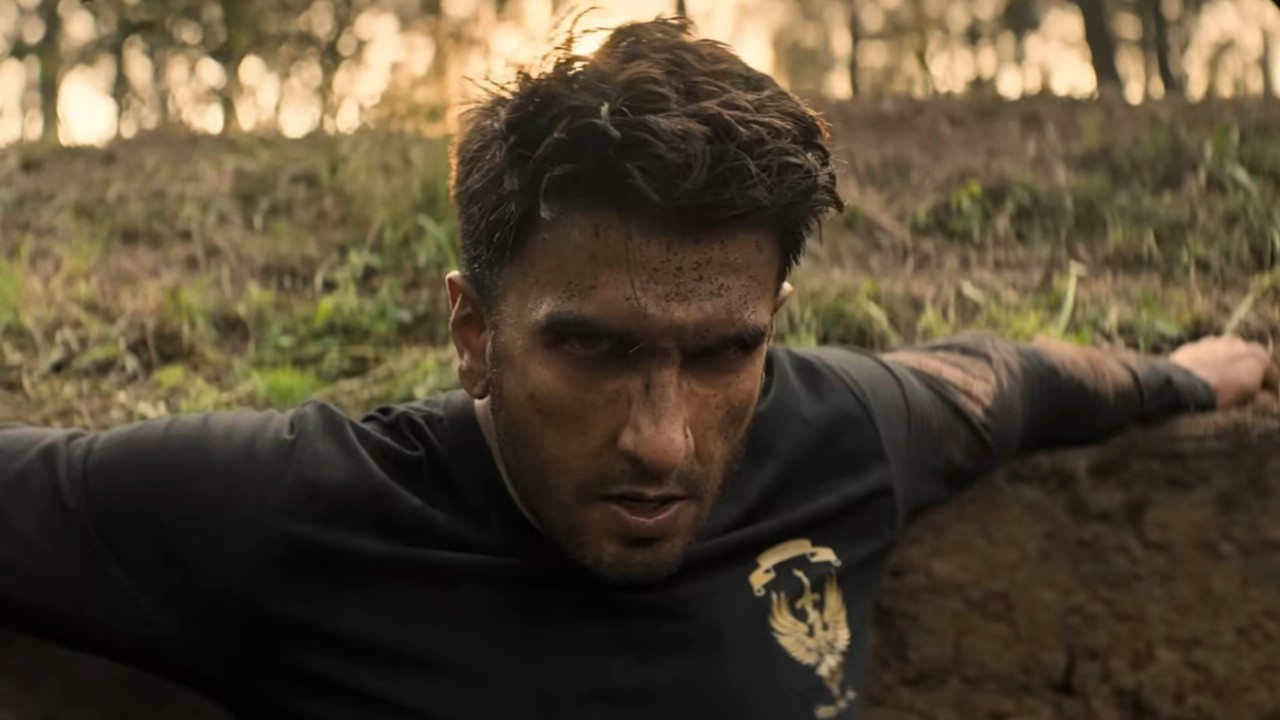

Like us, are you also hooked to the soundtrack of Ranveer Singh‘s latest release Dhurandhar 2 after watching the film? Well, that’s bound to happen. Afterall, these tracks don’t stop at the credits. They are playlist material- the kind you loop when you are hyped, healing, or just vibing.
Let’s take a look at how the songs in Dhurandhar 2 seamlessly drop storylines in stereo in this Aditya Dhar directorial.
(Major Spoilers Ahead)
Jaan Se Guzarte Hai
(Shashwat Sachdev, Khan Saab, Nushrat Fateh Ali Khan)
As Jaskirat (Ranveer Singh) sits in the train, carrying the weight of his family’s suffering, director Aditya Dhar makes a daring choice. Instead of a tense, suspenseful score, he overlays the moment with Nusrat Fateh Ali Khan’s iconic qawwali ‘Jaan Se Guzarte Hain‘, reimagined with electronic layering.
‘Jaan Se Guzarte Hain‘ literally means passing through life itself. The song becomes a mirror to Jaskirat’s state of mind. He isn’t just traveling to kill; he is crossing a threshold, leaving behind grief and stepping into vengeance. The train ride becomes more than a journey. It’s a rite of passage, a corridor where his old self dissolves, and a darker identity takes shape.
What makes this placement fascinating is the addition of electronic beats. They inject urgency into the track, symbolizing how Jaskirat’s revenge is both timeless (rooted in pain, love, and devotion), and modern (fueled by urban violence and adrenaline).
The song’s second half, ‘Aitbaar badhta hai aur bhi mohabbat ka, Jab woh ajnabi bankar paas se guzarate hain…‘ plays in the latter half of the film during Jameel Jamali (now unmasked as an Indian spy)’s farewell to Hamza/Jaskirat after the latter completes his mission.
The refrain ‘Dil pe zakhm khate hain, jaan se guzarate hain’ (we suffer wounds on the heart, we pass through life itself) captures the ache of parting between two men bound by secrecy and sacrifice. Jamal and Hamza/Jaskirat are allies, yet forced to walk separate paths, carrying scars of missions that bind them forever.
The lyrics about strangers passing by mirror the paradox of closeness through secrecy.
Putt Jattan De Maare Lalkare
(Surinder Shinda)
The makers drop the classic Punjabi boast track ‘Putt Jattan De Maare Lalkare‘ right at the beginning of the massacre scene in MLA Sukhwinder Singh’s room. Lines like ‘Koi aan ke maayi da laal takre, putt jattan de bulaunde bakre’, celebrate fearless sons flaunting their strength. But here, the bravado is twisted into irony. A song glorifying rural dominance blares inside a chamber of corrupt power, seconds before it’s torn apart.
Once the bloodshed begins, the soundtrack shifts into ‘Aari Aari‘, a modern, high-octane beat. The transition from folk bravado to contemporary chaos underscores the clash between old-world feudalism and Jaskirat’s new-age vengeance.
Aari Aari
(Shashwat Sachdev, Bombay Rockers, Irshad Kamil, Khan Saab, Reble, Token, Jasmine Sandlas, Sudhir Yaduvanshi)
Ranveer Singh’s character Jaskirat Singh goes on a killing spree to save his sister. The film layers this violent sequence with the high-energy ‘Aari Aari‘. The song’s folk-EDM vibe creates a surreal dissonance: the audience hears a song usually associated with dance and joy, while there is brutal violence unfolding on screen.
For Jaskirat, the spree is not just rage; it’s cathartic release. The music mirrors his adrenaline rush, almost turning the massacre into a twisted dance of liberation. ‘Aari Aari‘ carries Punjabi folk roots, tying the act of violence to his identity and heritage, making it feel personal rather than generic.
Dhar cleverly flips a celebratory number into a ritual of protection, suggesting Jaskirat sees his actions as righteous, even triumphant.
Hum Pyaar Karne Waale
(Shashwat Sachdev, Qveen Herby, Anuradha Paudwal, Udit Narayan, Sameer Anjaan)
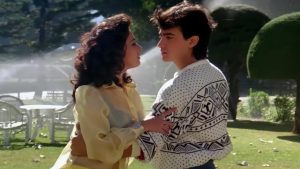
Back in Dil (1990), you had Aamir Khan and Madhuri Dixit singing ‘Hum Pyaar Karne Wale’ from behind bars- a cheeky, romantic revolt against their onscreen fathers. The song was pure 90s optimism: love as rebellion.
Cut to 2026, and the same hook, ‘Hum pyar karne wale, duniya se na darne wale’, resurfaces in Dhurandhar 2, but this time it’s drenched in EDM beats, English rap verses, and Gen Z swagger. The scene? Jaskirat (Ranveer Singh) being violently kidnapped from a police van by faceless men.
The lyrics now spit fire: “Ride or die ready for the fight”, “There’s witchy magic in my battle cry.” What was once a romantic anthem of youthful defiance is now a battle-ready chant.
Wild Ride
(Shashwat Sachdev, Ellisar)
Jaskirat, sent undercover in Kabil, stays in a room where he burns his family photo, a symbolic act of severing ties, before he heads to Pakistan for his mission.
Over this moment, we hear ‘Wild Ride‘ by Ellisar playing- a song about reckless nights, adrenaline rushes, and surrendering to chaos. Its lyrics don’t just play in the background; they foreshadow the storm ahead. Jaskirat’s mission is a plunge into danger, violence, and vengeance, with no way back.
The pulsing beats and carefree tone of the western nightlife song highlight how out of place Jaskirat is. He is alienated, stripped of roots, and about to be consumed by a world that doesn’t belong to him. The music makes his dislocation palpable, turning his mission into exactly what the song promises: a wild ride.
Bekasi
(RD Burman, Kishore Kumar, Anand Bakshi)
When Hamza sits across Aalam (Gaurav Gera) in the tea shop and begins to unravel his past, the soundtrack quietly slips in Kishore Kumar’s classic ‘Kabhi Bekasi Ne Mara‘ from Rajesh Khanna’s Alag Alag (1985). Dhar’s choice here is deliberate, almost surgical.
The song’s lyrics breathe of despair and helplessness, of being crushed by fate when all strength runs dry. It reframes Hamza’s past not as mere suffering, but as a defining wound that drives his choices. The tea shop setting is ordinary, but the song elevates it into a confessional space, where pain feels timeless.
Jaiye Sajna
(Shashwat Sachdev, Jasmine Sandlas, Satinder Sartaaj)
At Rehman Dakait’s funeral, grief hangs heavy as ‘Jaiye Sajna‘ plays in the background. Hamza stands among the mourners, silent, carrying the weight of a truth only the audience knows- he is the man who killed Dakait.
The widow’s anguish erupts when she slaps Hamza, her devotion to her husband echoing through the lyrics, ‘Aisi preet la layi rabba, jaisi hor kade hoyi na‘ (such love was forged, never seen before). For those gathered, the song is a hymn of fidelity and loss. Her eternal love collides with the hidden reality of Hamza’s role. The funeral becomes a stage where devotion and betrayal coexist.
Tere Ishq Ne
(Shashwat Sachdev, Jyoti Nooran, Kumaar)
Lyari is burning under Uzair’s war against Arshad Pappu. SP Chaudhary (Sanjay Dutt), leading the Lyari Task Force, is in the thick of the battle. Amid the chaos, a stray bullet shatters his tea cup- a symbol of calm, routine, and control. That small rupture triggers his fury, and he goes gun-blazing as we hear the Sufi-rock track ‘Tere Ishq Ne’ playing in the background.
The lyrics of the song speak of love that wounds, forces, and consumes. In this context, ‘ishq’ is not romantic. It is the destructive passion of vengeance and war.
Vaari Jaavan
(Shashwat Sachdev, Jyoti Nooran, Jasmine Sandlas, Reble)
On the surface, ‘Vaari Jaavan‘ drips with passion and surrender- ‘Ni main vaari jaavan mera sohna ae yaar‘ (I sacrifice myself for my beloved). Traditionally, such lines evoke fidelity, romance, and selfless love. But in Dhurandhar 2, the makers flip that sentiment on its head.
As Hamza (Ranveer Singh), now ‘Karachi ka Badshah’, showers the crowd with cash, campaigns with swagger, and shakes hands with the BUF leader, the song’s devotional tone becomes a sly commentary. The lyrics about giving one’s heart and crown are recontextualized as Hamza surrendering not to love, but to power. It bridges his two faces- the populist leader consolidating influence, and the avenger quietly plotting.
Didi (Sher-E-Baloch)
(Shashwat Sachdev, Khaled, Kings Of Yusuf, Nabil El Houri)
The scene where Hamza is crowned Sher-e-Baloch by the BUF leader unfolds like a coronation, and Dhar’s choice of Didi (Sher-E-Baloch) electrifies it.
Much like Akshaye Khanna’s Flipperachi moment in Dhurandhar, this is not just about music, but about myth-making. Lines like ‘Look who’s back like they never left / They see a gangster and a gentleman kicking the door‘ frame Hamza as a paradoxical hero- both feared and revered.
Baazigar O Baazigar
(Nawab Arzoo)
The placement of ‘Baazigar O Baazigar‘ is one of the most clever intertextual moves in Dhurandhar 2. After Hamza is forced to kill his childhood friend Gurbaaz in the washroom during a drug-fueled altercation, the band of musicians outside start singing SRK’s iconic track. Soon, Hamza himself joins in, and sings with them.
The lyrics, ‘O mera dil tha akela, tune khel aisa khela…Baazigar o Baazigar‘, are about betrayal and the cunning of a trickster. In this moment, they become a chilling commentary on Hamza’s own act. He has just silenced someone who recognized his true identity.
In Baazigar (1993), Shah Rukh Khan’s character also kills those who uncover his secret/identity, driven by a revenge mission against his family’s wrongdoers. By invoking that song here, the makers deliberately draw a parallel. Hamza becomes a modern-day Baazigar, a man whose vengeance demands blood and concealment.
Kanhaiyya
(Shashwat Sachdev, Jubin Nautiyal, Nawab Sadiq Jung Bahadur ‘Hilm’)
After being forced to kill his ally Aalam when the latter’s cover is blown, a shaken Hamza goes to the tea shop and orders two cups of salted tea- a quiet nod to the times when he and Aalam would sit there together.
We hear Nawab Sadiq Jung Bahadur’s Sufi kalam ‘Kanhaiyya Yaad Hai Kuchh Bhi Hamara‘ playing in the background. The song, steeped in Radha- Krishna imagery, is about divine longing and separation. Its yearning verses play over Hamza’s act of ordering tea for two, even though one cup will remain untouched.
The kalam’s spiritual ache mirrors Hamza’s personal grief. Just as Radha longs for Krishna, Hamza longs for the presence of his lost friend. The tea shop, once a place of camaraderie, now becomes a shrine of absence.
Tamma Tamma
(Bappi Lahiri, Anuradha Paudwal, Indeevar)
Aditya Dhar gives us a Bollywood meta moment in the scene involving SP Choudhary (Sanjay Dutt)’s assassination by playing Tamma Tamma (from Dutt’s own film, Thanedaar, which released in 1990).
In Thanedaar, Dutt swaggered into Jeetendra’s cop identity, cementing himself as a lawman with charisma and bravado. That film gave audiences the unforgettable sight of Dutt dancing with Madhuri Dixit to ‘Tamma Tamma‘, a track that embodied vitality, rhythm, and youthful abandon.
Fast forward to Dhurandhar 2. The same cop persona is assassinated, and the very anthem that once symbolized his energy now ironically scores his fall. Dhar weaponizes nostalgia not to comfort but to unsettle. The joyous beat becomes grotesque against the visuals of destruction, forcing the audience to confront the absurdity of cinematic myth.
The filmmaker doesn’t stop at this. He further extends the irony into Choudhary’s funeral sequence where the very police officer who betrayed him and caused his death also turns up, salutes the coffin, and even places a flower on it.
Main Aur Tu
(Shashwat Sachdev, Jasmine Sandlas, Reble)
The chapter ‘Unknown Men’ in Dhurandhar 2 shows Hamza’s diary targets- Abdul Rehman Makki, Syed Khalid Raza, Amarjit Singh, Muhammad Riyaz, and others being eliminated one by one by unidentified men. Each assassination is swift, clinical, and faceless.
Over this montage, the makers drop the song ‘Main Aur Tu‘. Its lyrics, drenched in intimacy, longing and togetherness (‘Jaan-e-mann, tu hai noor-e-nazar meri, dil mera tujhpe fida‘), play against the cold precision of death. Here, the refrain ‘Main aur tu‘ (me and you) becomes a twisted metaphor. Instead of lovers, the pair here is assassin and victim, locked together in a fatal dance of death.
The song’s intimacy mirrors Hamza’s fixation with his mission. His relationship isn’t with a lover; it’s with vengeance itself.
Aakhiri Ishq
(Shashwat Sachdev, Jubin Nautiyal, Irshad Kamil)
A wounded Hamza, after killing Major Iqbal, makes his final phone call to his wife Yalina (Sara Arjun). In this moment of truth, he finally reveals his real name to her. Both know it’s the end, and that they will never meet again. Yalina breaks down, and their farewell becomes a mix of love and pain.
The song ‘Akhri Ishq‘ plays over this exchange. Its lines, ‘Main na raha, to kya hua, tere paas hai ishq mera‘ frames Hamza’s confession as his last gift: even if he is gone, his love will remain. The flute interlude in the middle softens the sadness, echoing Yalina’s tears and showing the fragile beauty of their bond.
This is their last conversation, their last truth, their last moment together. By revealing his real name, Hamza offers Yalina the honesty he had withheld, and the song sanctifies that revelation. Until now, he has been defined by vengeance and violence; here, the music reframes him as a man of love, vulnerability, and sacrifice.
The yearning in the song and the flute’s gentle notes turn the scene into a farewell hymn. It is not just a goodbye; it is the mourning of a love story cut short by war.
Rasputin
(Boney M)
When IB chief Ajay Sanyal (R. Madhavan) calls to demand Hamza’s release, Lt General Shamshad Hassan (Raj Zutshi) tries to flex his authority, smugly asserting dominance. But the tables turn when Sanyal drops a video exposing Shamshad’s own betrayal- secretly leaking sensitive information from Pakistan to Israel.
At that exact moment, Boney M’s ‘Rasputin’ kicks in. The disco anthem, with its swaggering beat and lyrics about power, charisma, and eventual downfall, mocks Shamshad’s false confidence. The song’s theme of a powerful figure undone by his own secrets mirrors his situation.
Just as Rasputin’s legend was larger than life but ended in betrayal and collapse, Shamshad’s authority crumbles when his duplicity is exposed. The song turns his downfall into something not only dramatic but also darkly comic.
Rang De Lal (Oye Oye)
(Shashwat Sachdev, Jasmine Sandlas, Afsana Khan, Amit Kumar, Sapna Mukherjee, Amit Kumar, Kalyanji-Anandji, Anand Bakshi)
On his way to the plane back to India, Hamza admits the one regret that still haunts him- never being able to kill Dawood. That’s when Jameel drops a bombshell. Years ago, he had already poisoned Dawood with dimethyl mercury, slipping it in with his bandaged thumb. The act condemned the don to a slow, agonizing death, and the revelation plays out in a stylish montage set to the pulsating beats of ‘Rang De Lal (Oye Oye).’
The original ‘Oye Oye‘ from Tridev (1989) was a swaggering anthem of pop culture. Here, its reimagined version carries the same flamboyance but is twisted into a soundtrack for betrayal and hidden triumph. The disco-rock energy mocks Dawood’s supposed invincibility, turning his downfall into something inevitable, already scripted years ago.
By using ‘Rang De Lal (Oye Oye)‘, the makers turn Jameel’s revelation into more than just a twist in the story. The song adds a sense of irony and style. It mocks Dawood’s slow death, highlights Jameel’s cleverness, and fills the moment with the bold energy of revenge.
Aaah Men!
(Doja Cat)
Hamza learns that Jameel had secretly been helping IB chief Ajay Sanyal (R. Madhavan) all along, stepping in whenever Hamza’s mission in Pakistan hit a dead end.
Doja Cat’s ‘Aaah Men‘ is built on themes of dominance, allure, and hidden power. Its playful yet commanding tone mirrors Jameel’s double life- quietly operating in the shadows, but always in control of the bigger picture. By using the upbeat, cheeky energy of this song, Dhar reframes Jameel’s reveal not as grim betrayal but as a stylish twist, almost mocking the enemies who never saw it coming.
Phir Se
(Shashwat Sachdev, Arijit Singh, Irshad Kamil)
Arijit Singh’s ‘Phir Se‘ turns Jaskirat’s return into something far deeper than a reunion. It becomes a haunting reflection on memory, sacrifice, and the price of duty.
After slipping away from the authorities on the day of his debriefing, Jaskirat arrives in Pathankot in a turbaned avatar. He pauses at the doorway, silently watching his mother, sister, and nephews safe and happy. Decades of longing wash over him, his eyes brimming with tears. Yet he doesn’t step forward. He stands torn between the warmth of family and the weight of national duty.
The song’s lyrics echo his inner conflict. ‘Jo tu na tha, karte the hum baatein teri yaadon se‘ captures the years he lived only with memories, while ‘Phir se naina bhare, samjhe the hum gham hai khatam, dil hi na maane’ mirrors his tears- joyful yet heavy with the realization that sorrow never truly ends. The pauses in the music reflect his hesitation, as if the melody itself is asking: should he embrace his family, or turn back to the path of sacrifice?
In this moment, Jaskirat is no longer just a soldier. The song reframes him as a son and brother, a man who longs for home but knows he cannot have both love and duty.
Destiny- Mann Atkeya
(Shashwat Sachdev, Token, Vaibhav Gupta, Shahzad Ali)
The mid-credits montage of Jaskirat’s RAW training hits hard because of ‘Mann Atkeya- Destiny‘. As we see him pushed through brutal drills and endless preparation, the song becomes his inner voice.
It asks, ‘Who am I supposed to be?’, a question central to Jaskirat’s arc. He isn’t born a hero; he is shaped by pain, scars, and sacrifice. The rap verses show his grit and resilience, reminding us that every setback only made him stronger. Further, the borrowed lines from Nushrat Fateh Ali Khan’s popular qawaali’ ‘Man Atkeya Beparwah De Nal‘ elevate his struggle from personal ambition to divine destiny.
The track makes clear that every drill, every bruise, every sacrifice in his journey was part of a larger design. His destiny is both his burden and his crown.
At the end of the day, the Dhurandhar 2 soundtrack isn’t just music. It’s a whole mood board! Let us know which is your favourite song from the film’s soundtrack album.


