








Who needs a hero when Akshaye Khanna makes being bad look this good? Here’s a quick look inside his wild villain era.

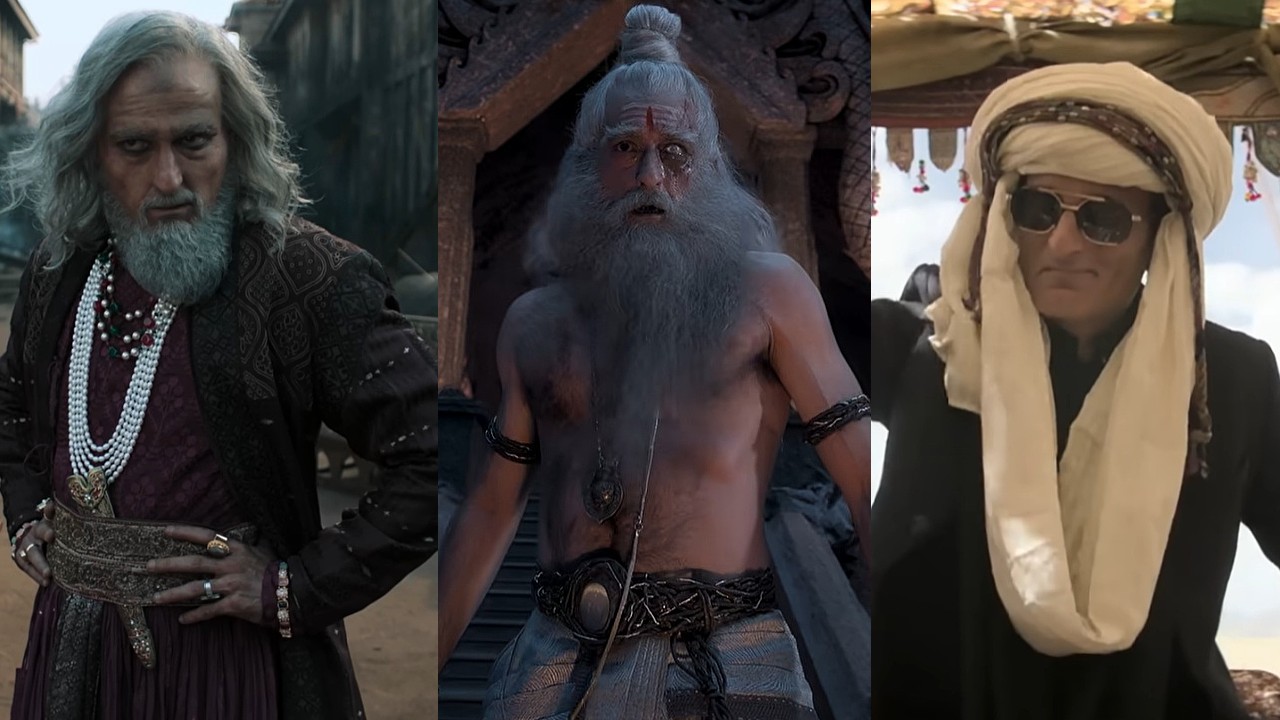
Akshaye Khanna’s latest outing in Prashanth Varma’s upcoming mythological film Mahakali feels like the crown jewel of his villain era. As Shukracharya, the guru of the Asuras, he is not just another dark figure lurking in myth. With his tangled hair, wild beard, and eyes that seem to have stared into the abyss, he embodies a cosmic rebel who believes the divine order itself is rigged.
The first look which dropped recently gave us a peek into a character that is both terrifying and magnetic. It made us realize how far he has traveled from the polished hero roles Bollywood once expected of him.
That journey has been long and deliberate. Back in 2002, when Hindi cinema was busy serving up glossy romances and family dramas, Akshaye chose Humraaz. He played Karan Malhotra, a schemer who convinced his girlfriend to marry a billionaire so they could swindle him. He was charming, hypnotic, and unapologetically ruthless. The audience almost wanted him to succeed because he made villainy look clever and seductive.
That taste for deceit only sharpened in Race (2008), where he turned brotherhood into a disposable commodity and betrayal into an art form. Even after a break, he returned in Dishoom (2016) with a swaggering performance as Wagah, a cricket bookie who chewed cigars and stole scenes with effortless menace.
His hunger for variety showed again in Chhava (2025), where he stepped into the robes of Aurangzeb, one of history’s most ruthless rulers. He played the emperor with chilling calm, letting silence and stillness suffocate the screen. Khanna wanted scale, menace, and gravitas, and he delivered all three.
But in the same year arrived Aditya Dhar’s Dhurandhar which changed the game completely for him. As Rehman Dacait, he looked raw, dangerous, and unhinged, like a man who had clawed his way out of the underworld. The performance was so intense that it went viral on social media.
The impact of Dhurandhar was immediate. It gave him a new identity, one that was darker, riskier, and far more unpredictable. That shift opened the door for his next reinvention in the Netflix film Ikka, where he essayed the role of Shauryamann Gaur in a tense courtroom thriller. Unlike the chaos of Rehman Dacait, this role was all about quiet unpredictability. Khanna showed us how he could dominate a drama with restraint, keeping viewers on edge without raising his voice. And now with his upcoming film Mahakali, it’s only getting bigger and better.
What makes his choices so refreshing is the contrast with his peers. While many leading men chase safe, crowd-pleasing hero roles, Akshaye has built a career out of risk. He understands that audiences secretly crave imperfection. The heroes may be noble, but villains are fascinating. They get the freedom to be witty, stylish, unpredictable, and terrifying all at once. Watching him embrace the dark side is thrilling because he does it with joy and fearlessness. He is not just playing bad guys. He is reinventing what it means to be one.
From the romantic charm of Dil Chahta Hai and the comic timing of Hungama to the viral menace of Rehman Dacait and the mythic rebellion of Shukracharya, Akshaye Khanna’s career is a proof that reinvention is the boldest move an actor can make. He has shown that playing safe may keep you popular, but playing dangerous makes you unforgettable. Like American actor Mark Pellegrino once famously said, ‘There’s no hero without a villain.’


